Acorn Atom
Summary
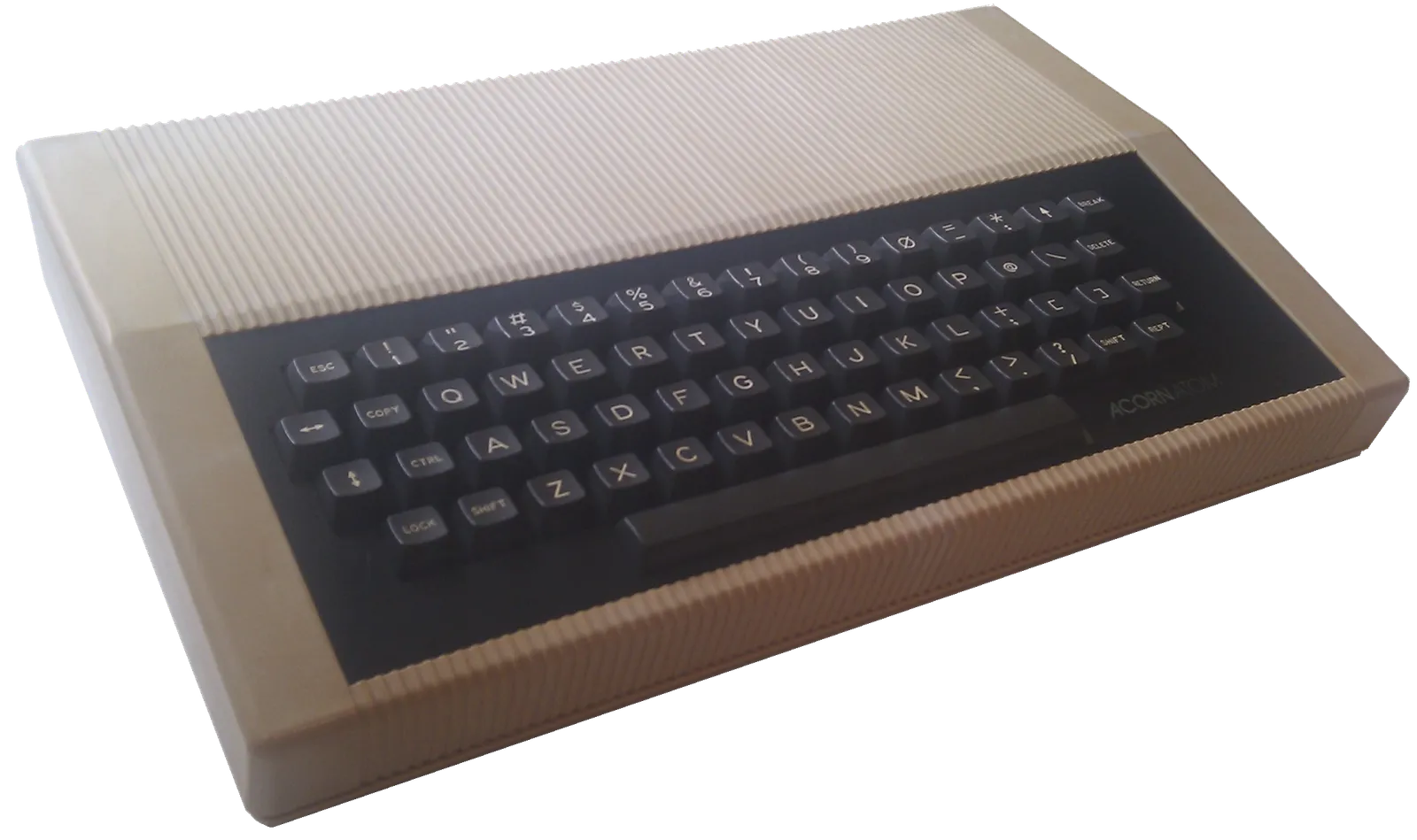
Released in 1980, the Atom was Acorn’s first computer aimed directly at consumers rather than electronics hobbyists. Alongside the assembled computer at £170, however, a £120 kit was available. Its UK price fell to £50 in 1983. Based on the MOS 6502 CPU, it has 2 KiB RAM, expandable to 12 KiB, and monochrome graphics at 256 × 192 pixels, a high resolution compared with competitors at the time.
Expansions gradually appeared for the Atom, including improvements to its limited built-in BASIC, which handles only integers. BASIC and assembly language can be mixed, something few systems supported at the time. The Atom has a spare “Utility ROM Socket” on its circuit board for ROM expansions. The external 5¼-inch floppy drive with a capacity of 100 KiB is rarely found, as it cost about twice as much as the Atom computer itself.
The atomic successor is the BBC Micro.
An optional colour board provides resolutions of 64 × 64, 64 × 96 and 64 × 192 pixels in 4 colours, and 128 × 192 in two colours, although the hardware is prone to overheating. A network card can connect up to 255 Atom computers through Econet at 210 K/baud. Econet was also available for other computers, and Linux supported it for a time before IP became the standard.
Family tree
- Predecessor · not in the collectionAcorn System 3
- This objectAcorn Atom
- SuccessorBBC Micro
Sources and further links
Connections in the collection
In the exhibition concept
- Self-building projects and learning systems · Area D, Section 2
- The beginnings of the 8-bit home computers · Area C
Mentioned in
Keywords
Acquire the complete collection.
The collection is offered as a whole. The inventory lists show which objects are included.