History of home computers and game consoles
The exhibition concept shows how this story can be told as an exhibition.
This page and subpages show the history of personal computers and video game consoles with examples from the collections. The collections include various models, accessories and software that reflect the technical and cultural developments in this area. The development is divided into sections dealing with a specific period of time or aspect. Each section consists of several sequences that deepen individual themes or events.
Birth of digital information processing
Basics of information processing
There are key milestones in electronic data processing. Topics include:
- Numbers and calculators
- Binary (dual) system
- Digital calculator vs. analog calculator
- Relay Computers
- Electron Tube Computers
- Discrete components
- The Integrated Circuit (IC)
- Microprocessor (CPU)
Calculator history
It took more than 30 years for the computers to become personal. At first, there were only mainframes and minicomputers until the first home computers came onto the market.
Calculators
Affordable “computers” of the first hour are the calculators. They’re developing rapidly. At first, they only offer the basic calculation types, later further function. Modern calculators are freely programmable calculators, with a powerful computer algebra system.
Computers for hobbyists
Personal computer/home computer
In short, home computers are cheap personal computers that private individuals can afford. In this way, they distinguish themselves against expensive mainframe computers for companies and administrations. The high phase is in the 1970s and 1980s, until the IBM-compatible PC sets a standard in the hardware and DOS, Windows and Linux become the standard operating systems. Home computers form a focus of the collection and occupy the largest space.
Computers for hobbyists
The first home computer owners are hobbyists who find blueprints in magazines, and with a lot of enthusiasm and skill build and program their own computers with the first CPUs. In time, the names Bill Gates and Steve Jobs came into the press for the first time.
The birth of an industry, the birth of a culture - From the first experiments to the worldwide phenomenon
Early experiments with games on mainframes took place largely unnoticed by the public. After Ralph Baer - The Father of Home Consoles (1922 - 2014) successfully experimented and developed a console prototype, the pioneering age of video games began in 1972. These innovations marked a turning point in consumer electronics. The Magnavox Odyssey and Atari’s Pong reached the market only a few months apart, ushering in an era that would change how people played and were entertained.
Especially the worldwide success of Pong makes Atari an undisputed market leader. Atari initially dominates the arcade business, and from 1977 onwards, the company continues this success with the Atari VCS in the newly emerging console market. The diversity of different systems and games leads to an exponential growth phase in industry. It seems that the video game industry is expanding unstoppably.
However, this flowering period is short, because the oversupply of systems and games is a bubble that will inevitably burst. The seemingly endless boom is accompanied by the growing challenges associated with the variety of offers. A situation arises in which industry faces the challenge of maintaining quality and innovation in order to withstand market pressures.
Despite the impending bursting of the bubble, the era of video games remains a milestone in the history of consumer electronics. The foundations laid in the early 1970s paved the way for the development of state-of-the-art gaming consoles and interactive entertainment experiences that still have a fixed place in the world of technology and entertainment.
Games in the lab
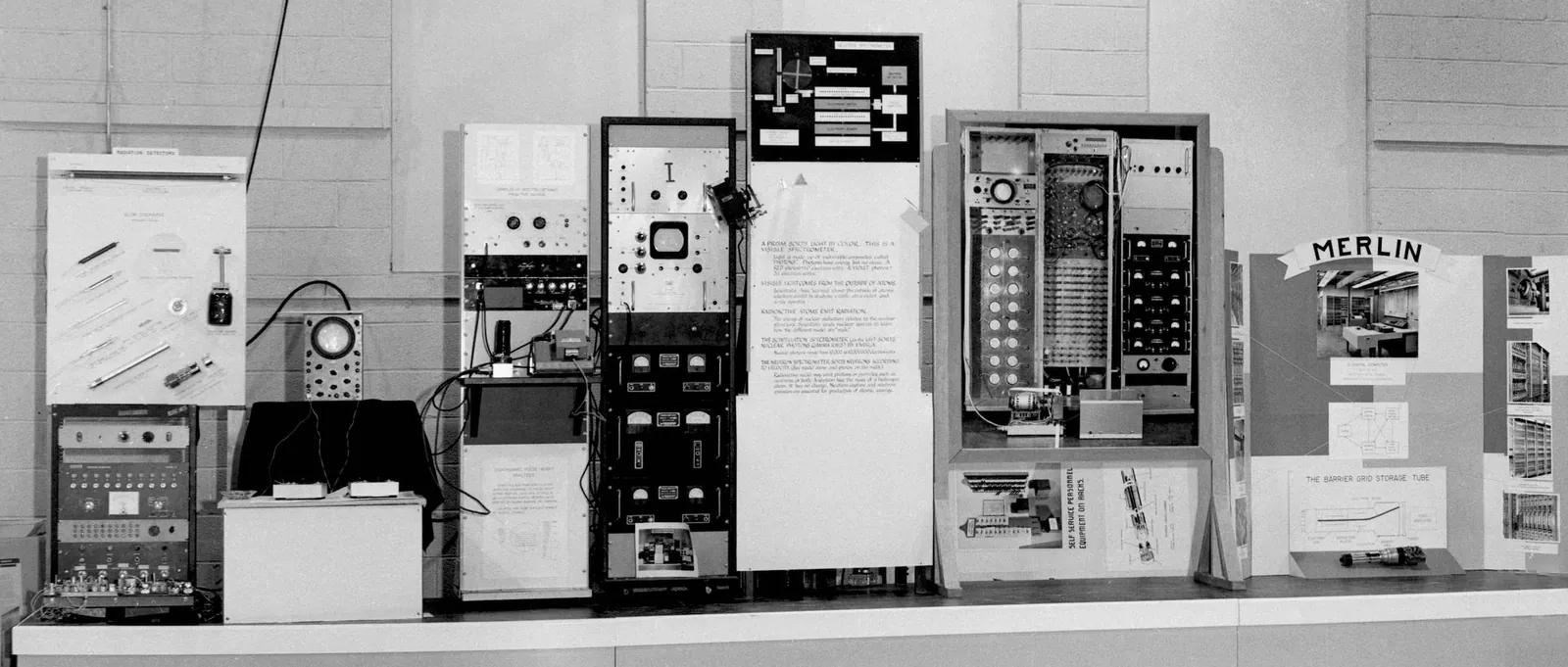
The history of video game consoles begins decades before the first commercially available machine. Computers are mainly in public hands after the Second World War and are mostly reserved for technical universities. Also, it is only conditionally possible to speak of computers in today’s sense, because in terms of appearance, operation and performance, they have little to do with our present idea of a computer – rather they remind us of complex experimental arrangements.
These machines did not appear tied to a single purpose, so researchers naturally explored alternative uses. Testing and demonstrating the technology remained the main aim, but this playful experimentation produced the first video games. The experimental phase ended in 1971 with Computer Space, the first commercially mass-produced video game.
Electronic toys
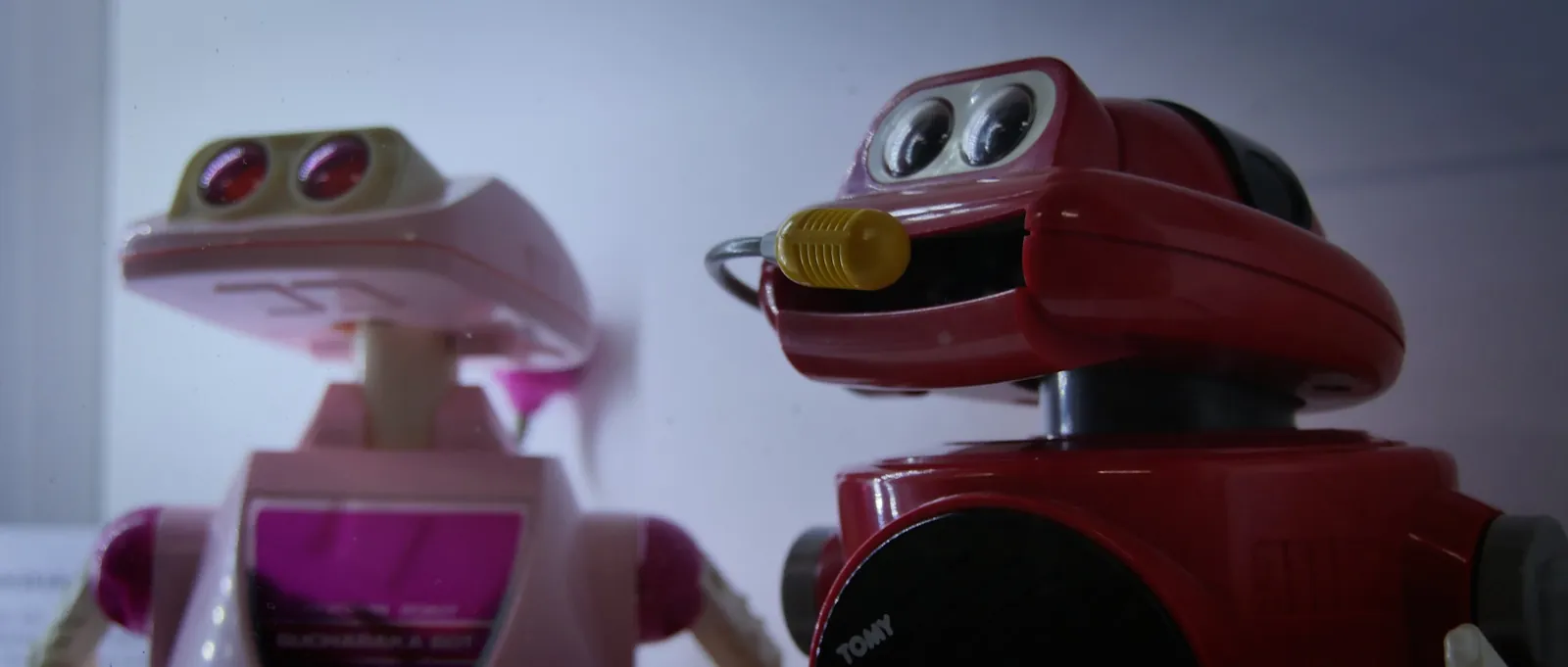
Game consoles are only one aspect of electronic gaming for home users. From the late 1970s, numerous toys and board games are relying on digital technology; arcade games are also adapted with modest means from today’s point of view.
The Magnavox Odyssey
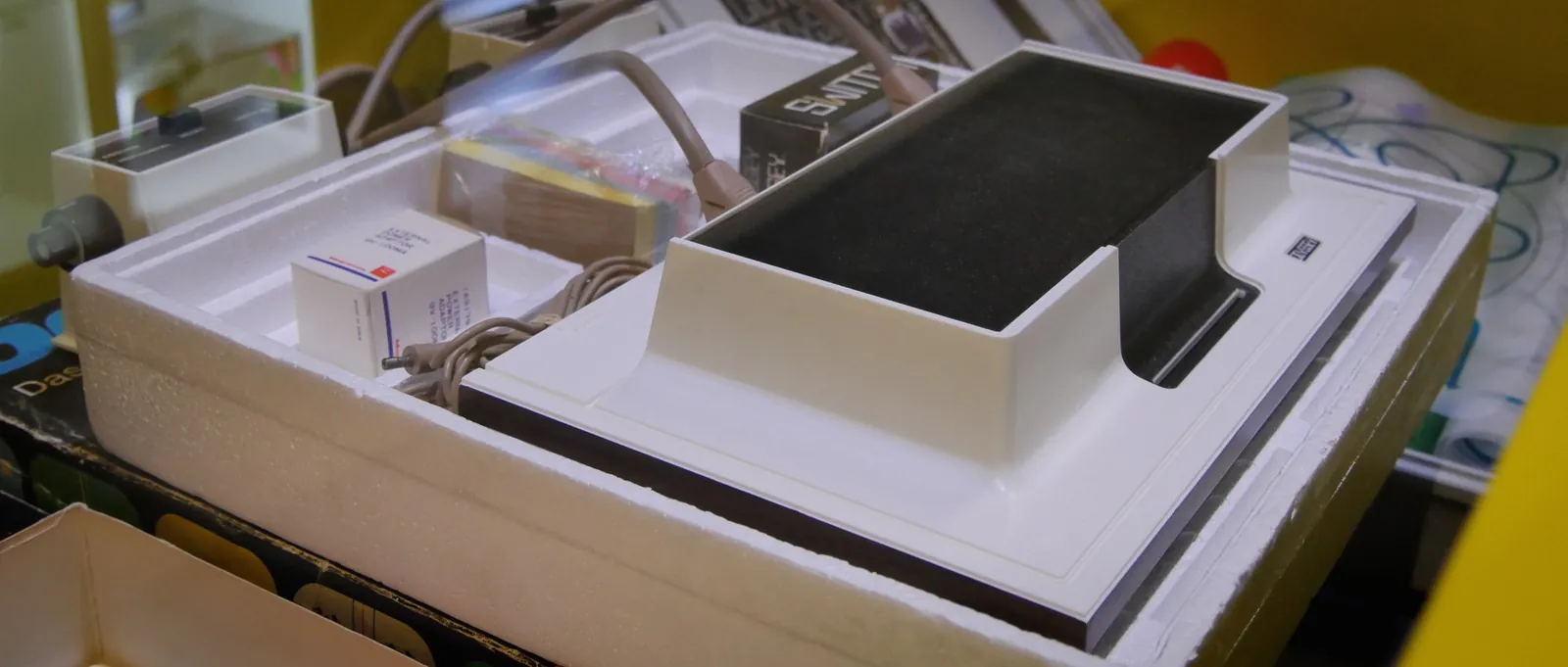
In 1966, Ralph Baer - The father of the home consoles (1922–2014) had the idea of using television sets to play games. In 1969, the German-born inventor, who had emigrated to the USA, presented his “Brown Box” to various television manufacturers. After initial hesitation in the industry, Magnavox acquired the licence in 1971 and produced the Odyssey, the first commercial home video game console, launching the video game industry.
The few white dots and blocks on black background are represented by only 40 transistors. Depending on the version of the Odyssey, ten to 28 games can be played with various additives such as slides for the TV, dice or chips, with the variants often only differ by the used slides.
Atari and Pong
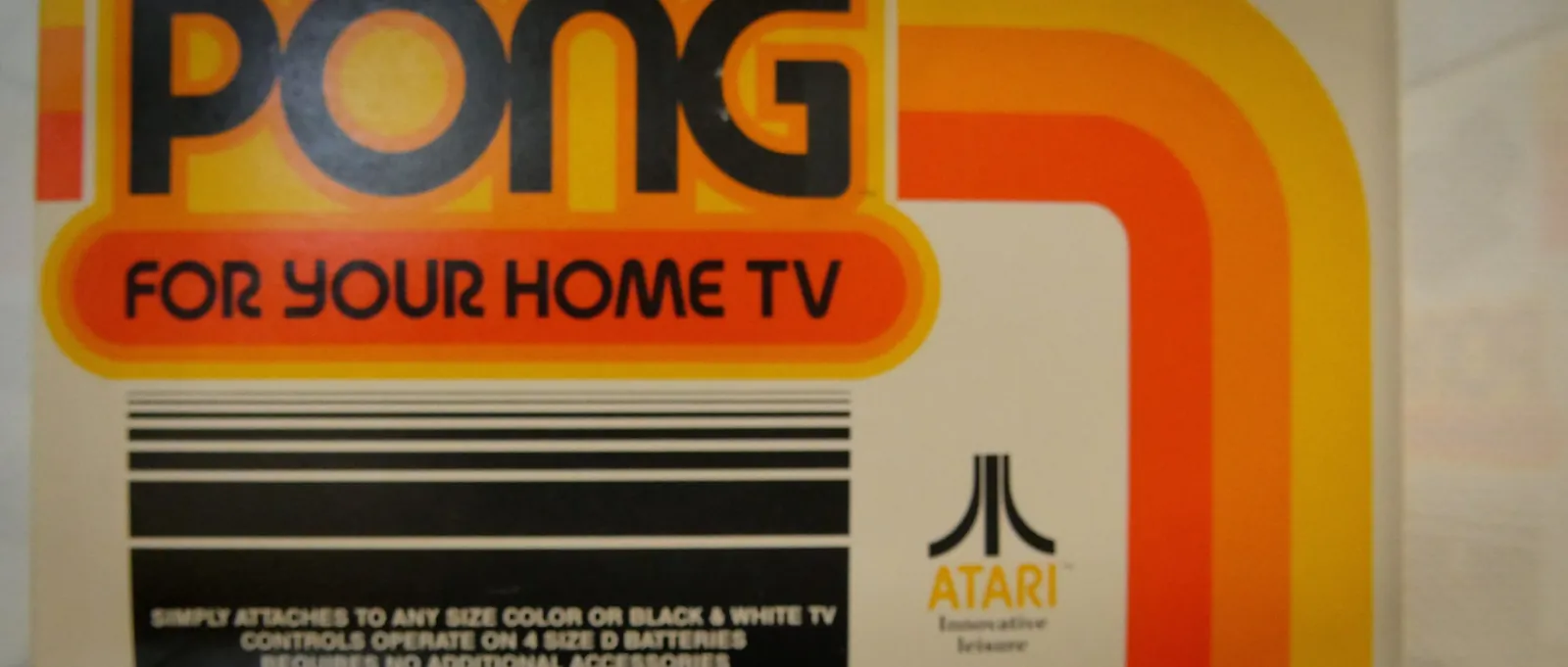
The electrical engineer Nolan Bushnell sees Spacewar! during his studies and believes that the game can be used commercially. The adaptation, which he built in 1971 together with his colleague Ted Dabney under the name Computer Space, remains unsuccessful, according to Bushnell’s assumption, because the operation is too complex. When he attends a presentation of the Odyssey in 1972, the tennis game included in it becomes the inspiration for Pong, a game with only two knobs and the simple guide “Avoid missing ball for high score”.
A few days after Bushnell and Dabney put the prototype in a bar, the device no longer works, because the coin box is overflowing and people are still queuing to play before the bar opens.
The success attracts imitators, but because the newly founded company Atari, Inc. has not yet applied for a patent, it only remains to produce innovations – the beginning of modern video game history.
Generation 1
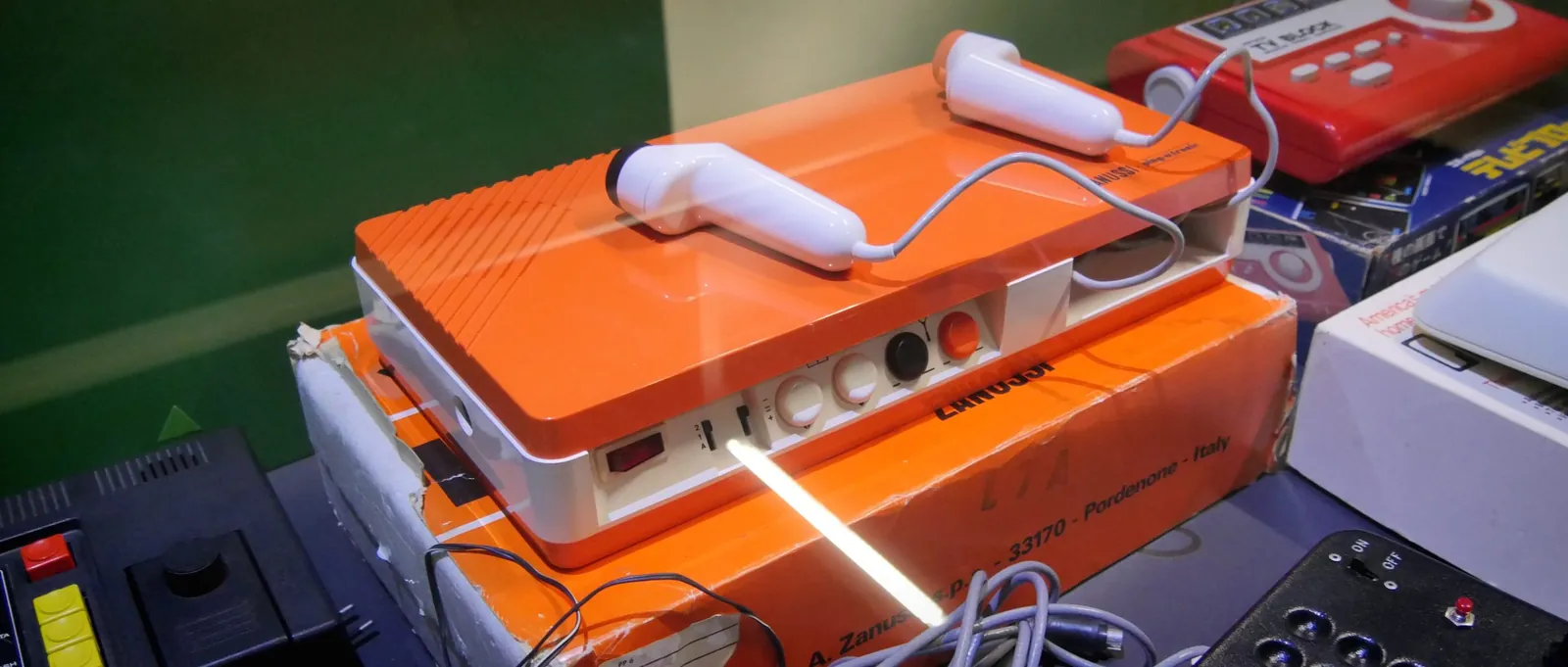
The first generation of game consoles offered only a fixed set of games, as the devices had no CPU in the modern sense. Simple electronic circuits implemented the games. General Instrument later developed the AY-3-8500 chip, used in thousands of consoles. Pong was among the most popular games, which is why these first-generation TV games are commonly called Pong consoles. At the end of 1977, Thomas Gottschalk introduced them to a wide audience on the television programme “Telespiele”. Meanwhile, arcade machines were appearing in pubs.
Interton - The only German console manufacturer
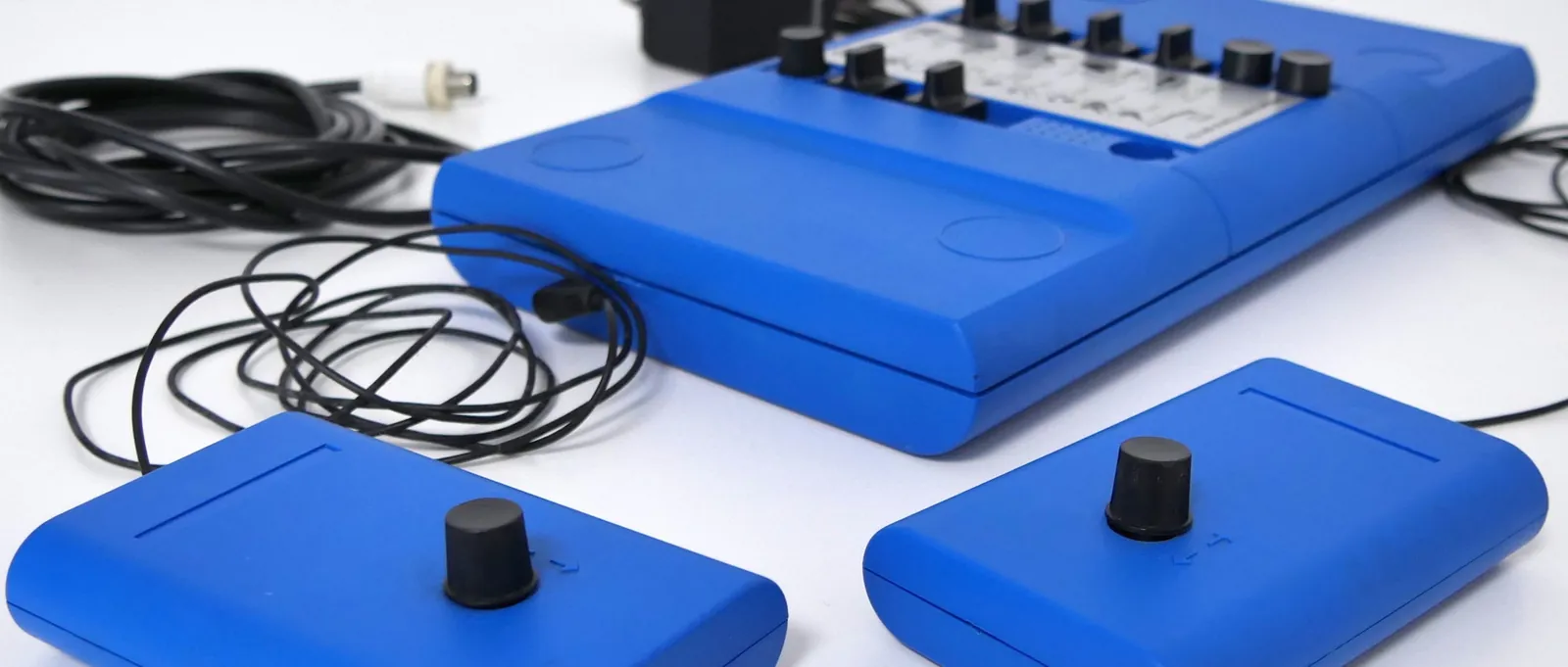
Founded in 1962, Cologne-based hearing aid manufacturer Interton entered the lucrative electronics business in the 1970s, with calculators, telephone systems, car on-board computers and video game consoles. At first these are the usual pong consoles, later Interton produces two module-based devices.
The technology installed in the consoles is not from Interton, but the design does. Interton is the only German game console manufacturer to date, which has also produced its devices completely in Germany.
Interton withdraws from the electronics business after the video game crash of 1983 and since then produces hearing aids again. In 2005 the company is bought by the GN ReSound Group. In the official company history the episode, in which Interton consoles produced, does not appear.
The Golden Age of Arcade Games
Under the “golden age” for arcades, the period from about 1978 (publication of Space Invaders) to about 1983 (publication of Nintendo’s Famicom in Japan) is taken. In this short period of time, arcades experience an unprecedented level of innovation, both technically and creatively, until home consoles gradually overtook them during the 1980s.
Many characters that emerge during this time are also part of the pop-cultural memory for people who have nothing to do with video games: the form of space invaders, Pac-Man, Donkey Kong and Mario (at that time called Jumpman), to name but a few.
Arcade games have a direct impact on the market for home consoles – enabling the quality and atmosphere of an arcade even in the home living room is a measure of everything for manufacturers and players for years.
Generation 2 - A new market
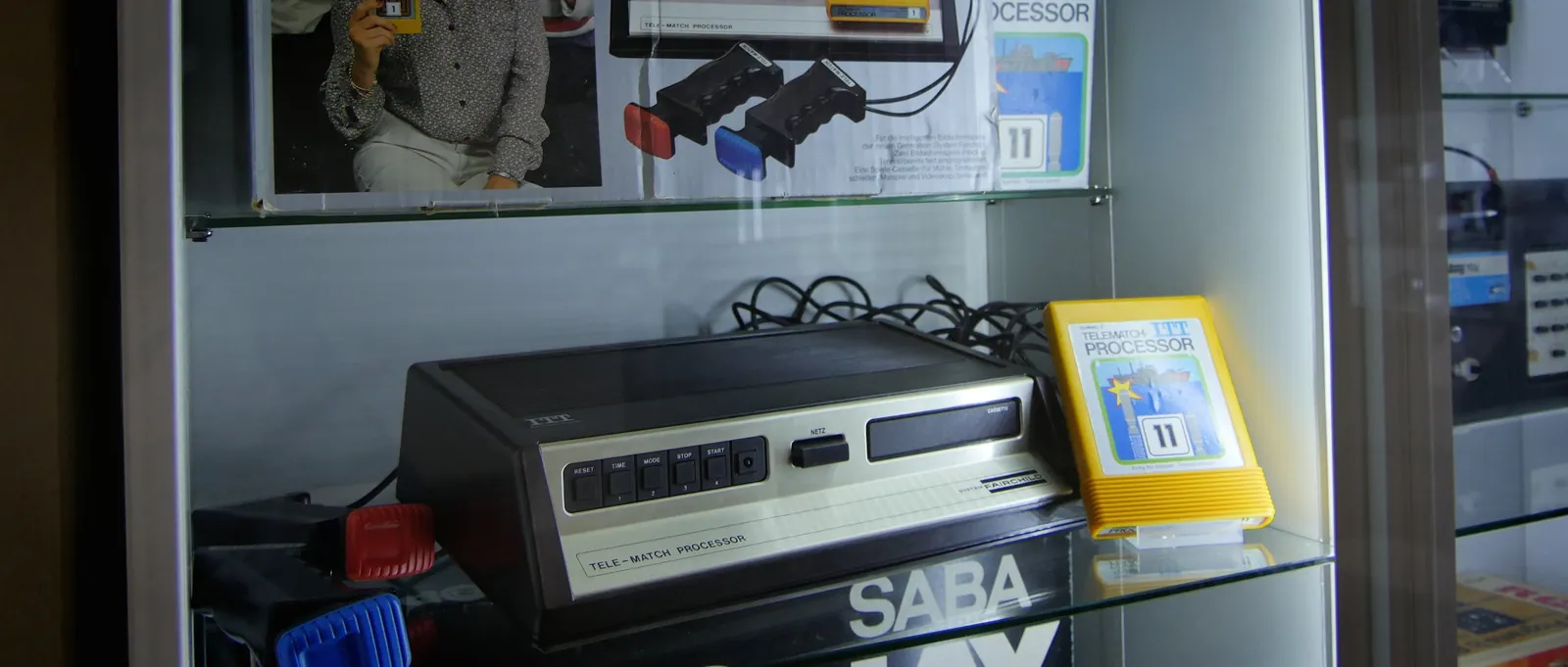
The second generation of game consoles is a defining feature of what is commonly referred to as “video games”. Games are no longer permanently installed in the consoles, but can be purchased on modules that no longer contain a processor, but only the actual game. The graphic is multicolored and the resolution is so high that objects and landscapes can be immediately recognized as such. Instead of simple signal sounds, the consoles now play multi-voice music.
The development of almost all genres that still exist today also falls into this era (sometimes first appearing in the arcades), whether shoot’em up (Space Invaders, 1978), Adventure (Adventure, 1979) or platformer (Pitfall!, 1982).
The success of these consoles surpasses that of the Pong telegames by far. Within less than five years, this creates a billion-dollar industry that is characterized by creativity, diversity and innovation.
Peripherals of Generation 2
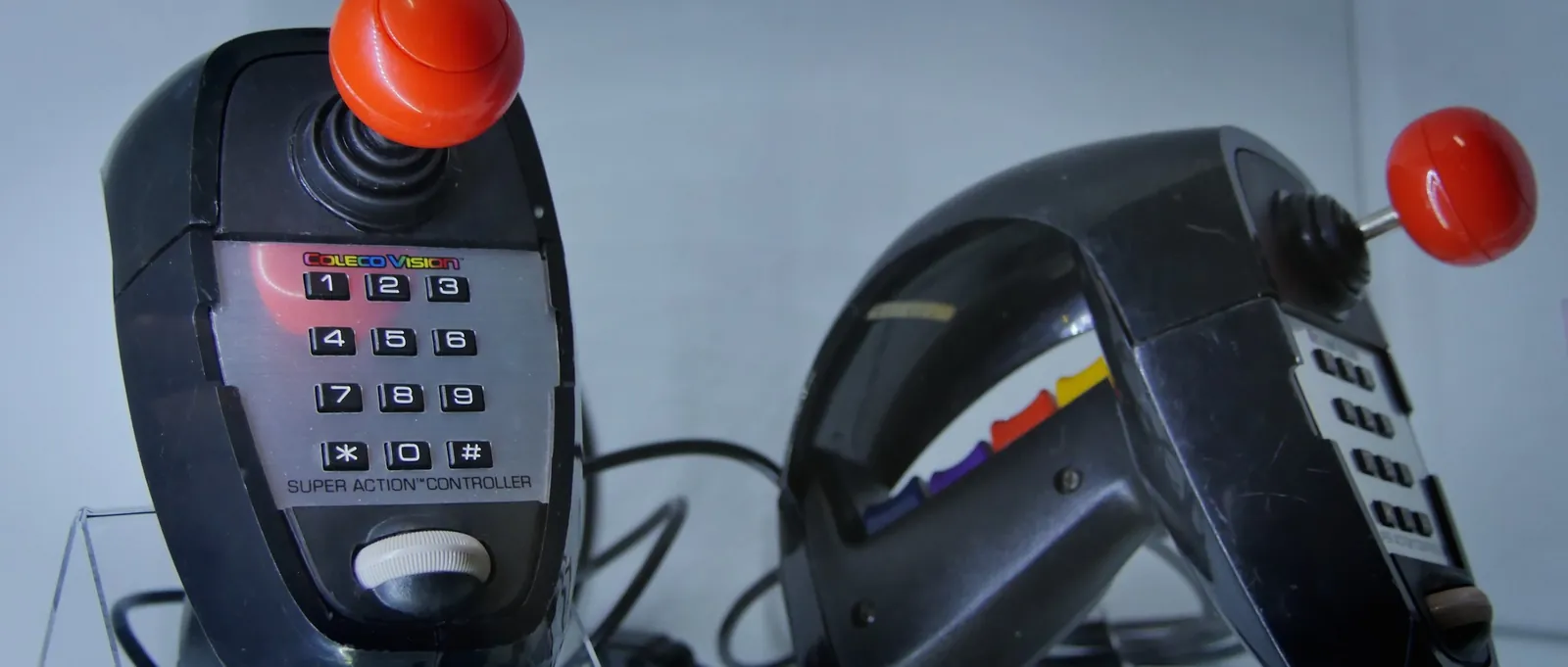
To play a console game, you only need the console itself, a module, a TV and a controller. Nevertheless, from the second generation onwards, countless accessories appear that either expand the experience for individual games or the console itself.
Implementations of arcade games play a major role at this time. These are always based on an optimally adapted, current hardware, while the consoles are unchangeable. For an authentic gaming experience they must therefore be retrofitted, with controllers that correspond to the models or technical gadgets such as modules for voice output. Most of these extensions only support a handful of games and are useless beyond that.
Another trend is the expansion of the console into a home computer, but all projects of this kind either fail or remain meaningless in terms of sales figures.
Activision and the rise of 3rd party developers
In the first years of the home console industry, Atari games are published exclusively by Atari, games for the Channel F of Fairchild, and so on. In 1979, four game designers at Atari realized that their games contribute millions of sales to their employer, but they themselves work anonymously and for a fixed salary. In a conversation with Atari CEO Ray Kassar, Larry Kaplan, Bob Whitehead, Alan Miller and David Crane are calling for royalties and a mention of their name on the front page of the games. Kassar replied that the four were nothing but towel designers whose job anyone else could do the same.
Kaplan, Whitehead, Miller and Crane then resigned and founded Activision, the first 3rd party publisher in the history of video games (whose name is not least created to “Activision” before “Atari” in the phone book). Atari sued unsuccessfully against the new and extremely successful company, which puts its designers in the foreground and stages them as stars.
The first complete computers
Complete computers such as the Commodore PET-2001 followed, along with accessories. The CP/M operating system and Word Star appeared, and networks connected computers. Yet for a long time, magazines remained the main source of information, rather than an Internet available to everyone.
8-bit computer - From hobby to mass market
The 8-bit home computers of the early 80s reached a mass audience for the first time because they were affordable and user-friendly. Although practical application software was available, games were particularly important in making these computers appealing to young people. After a brief anarchic phase, the emerging games industry quickly became more professional, with competition driving increasingly polished and elaborate gaming experiences.
In the high phase of the 8-bit computers many companies enter the market, in Germany the Commodore 64 and computers of Atari and the Schneider CPC become known. In Japan, many computers implement the MSX standard. IBM launches the first 16-bit consumer PC. In the beginning, things are slow, but 20 years later IBM-compatible computers have the market under control.
The Console War - The Triggering Competition of the 80s and 90s and the resulting innovations
In 1983, users are increasingly insecure in view of the mass of different systems and games on the market, so that few events suffice to cause the Western market to collapse. While business continues in Japan, the West is only slowly recovering from the crisis in 1985. There follows a gigantic economic war between the two big competitors Sega and Nintendo as well as smaller manufacturers on numerous side-shows. The technology develops rapidly due to this competition. Within only 15 years pixel graphics and chiptune music are replaced by realistic 3D representations with orchestral accompaniment. The second wave of numerous consoles from different manufacturers does not lead to a crash, but instead the field is reduced to the three companies that still dominate the market today: Nintendo, Microsoft and Sony.
The Videogame Crash of 1983
The founding of Activision is a blessing and a curse for the industry: the fact that everyone now produces games ensures an explosion of software. For the Atari 2600, in 1982 and ‘83, about 300 titles are published by third parties alone, while Atari itself has published just over 50 games since the launch of the 2600. In addition, there are nine different consoles on the market in the USA in 1983, all of which are arguing for market shares.
The oversaturation of the market, the often poor quality of third-party games and some prominent flops of Atari itself lead to a fall in sales in North America in 1983. Mattel, Coleco and MB as well as countless other hardware manufacturers are withdrawing. Countless software companies are breaking down. Atari loses about $500 million (adjusted for inflation about $1.2 billion) due to this collision and is smashed into several companies that have nothing in common with each other except the Atari name and logo.
Nintendo - From Playing Cards to Playing Consoles
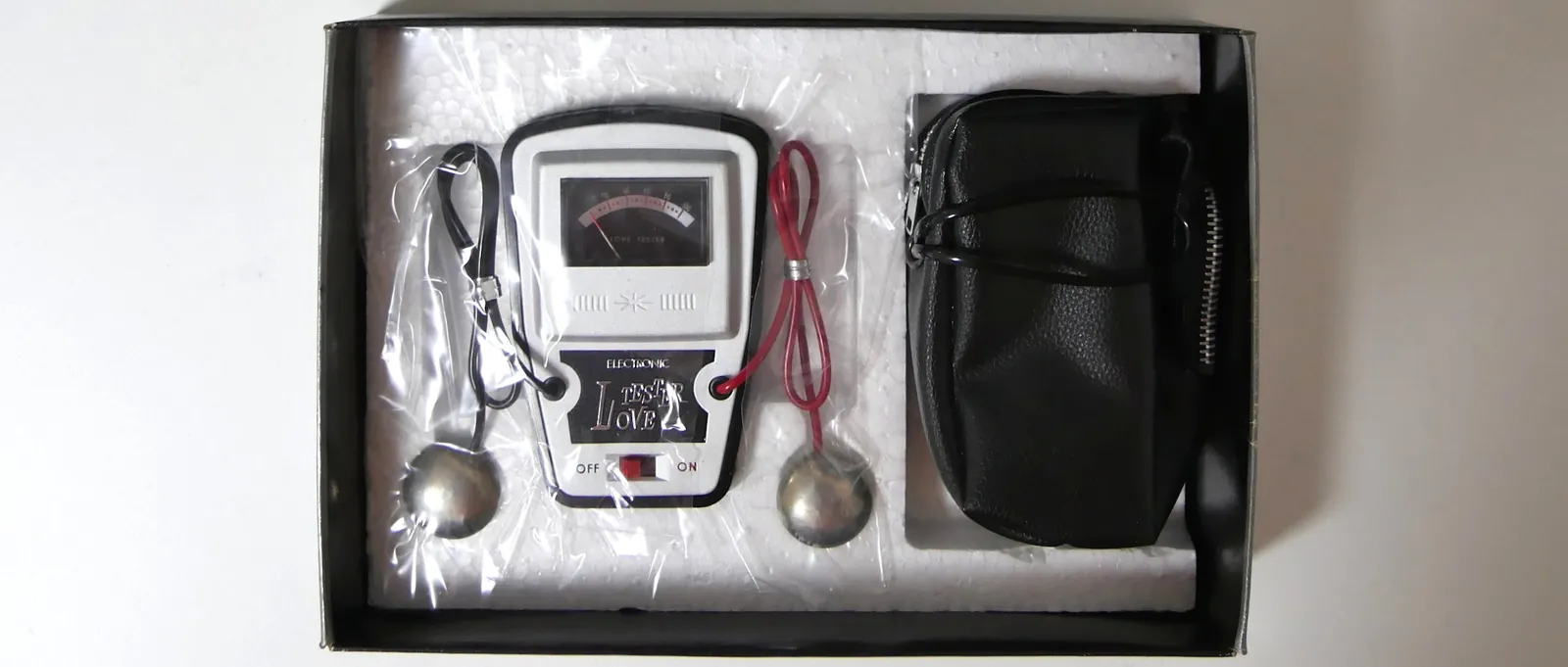
Nintendo is founded in 1889 as a card game company. In the 1960s, the company’s heir Hiroshi Yamauchi experimented in other business fields and, under the name Nintendo, founded, among other things, a taxi company and a chain of hourly hotels, and produced remote controlled vacuum cleaners. All these ventures are failures until the surprising success of a telescopic hand (developed by the later Game Boy inventor Gunpei Yokoi) establishes the company as a toy manufacturer.
With the advent of electronic toys a few years later, Nintendo produces a series of lightgun games and soon afterwards arcade games and pong consoles. The worldwide success of other Yokoi developments such as the Game&Watch series (1980) and the Donkey Kong arcade hit (1981; together with Shigeru Miyamoto) finally gives the company the financial backing to develop a console with Famicom in 1983 that will dominate the market for years.
Generation 3
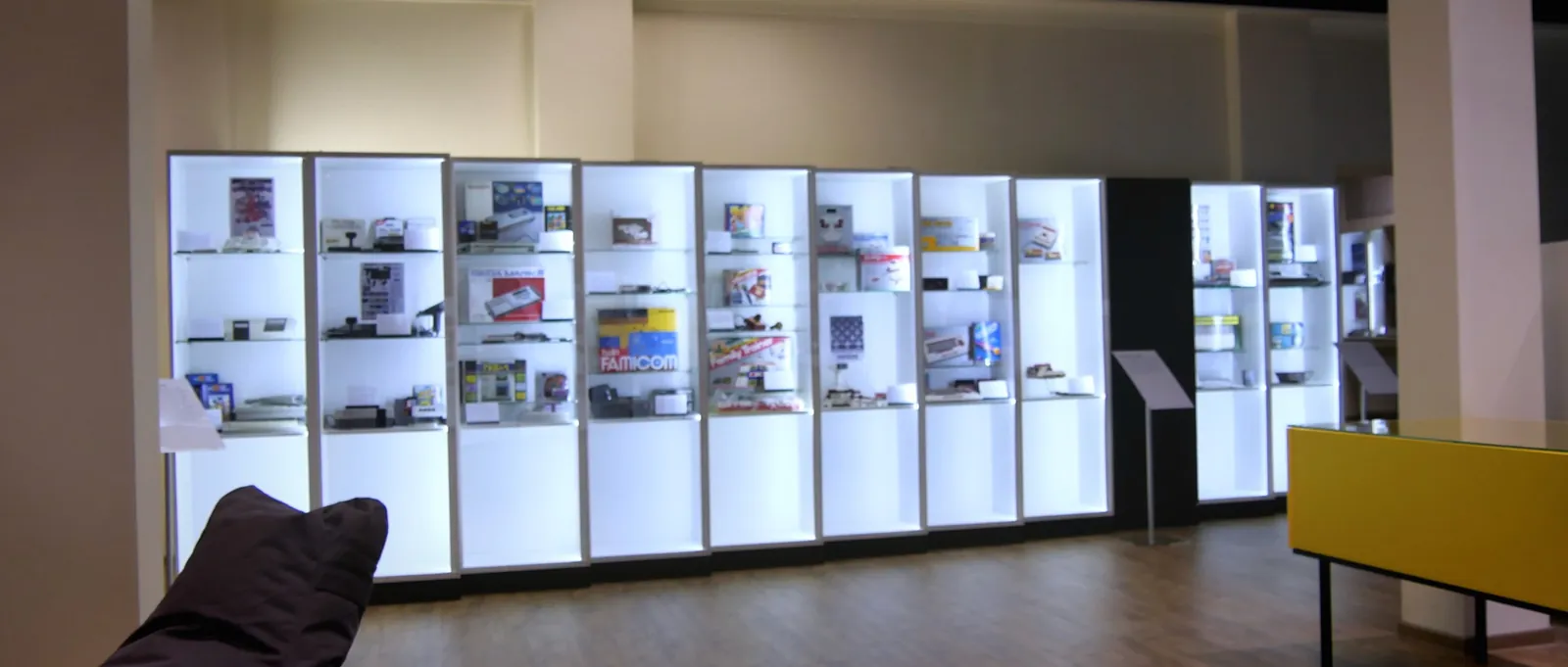
The video game crash destroyed the western console market. Mattel, Coleco and MB have withdrawn from the business, Atari can’t build on old successes with the Atari 7800, all other Western machines of this generation remain exotic. Instead, home computers such as the Apple II, the C64 or the ZX Spectrum prevail in the US and Europe and take on a role as inexpensive gaming machines that are also suitable for applications and can be programmed for themselves.
For Japan, the video game crash is irrelevant. Nintendo’s Family Computer (Famicom), in fact a hybrid of console and home computer, becomes the undisputed market leader. On the same day as the Famicom, a company’s first game console, which was founded as Service Games, will become Nintendo’s biggest rival under the abbreviated name of Sega.
Playstations
Six playstations invite visitors to play.
The PC engine
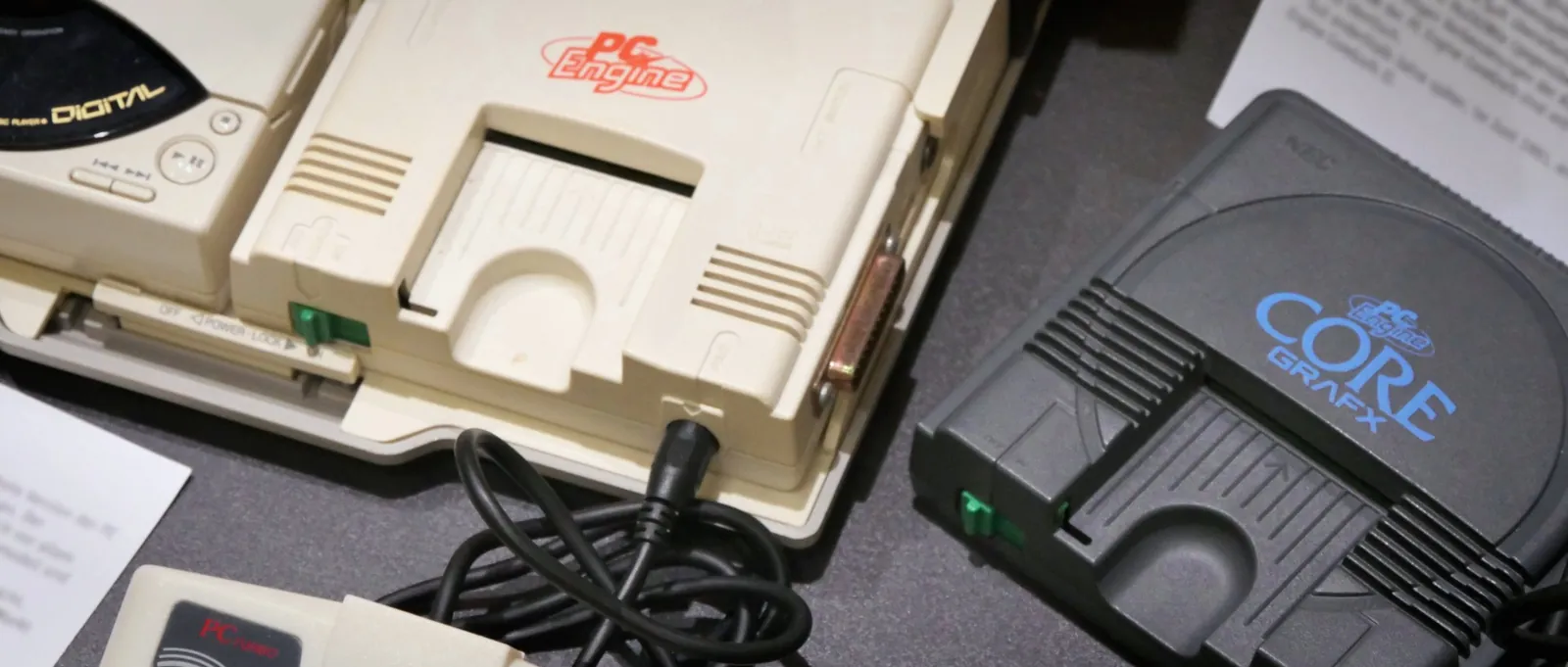
The PC Engine is distributed in different countries under different names and partly completely different design. Also in terms of technology, the machines differ marginally from each other, so that games do not necessarily run on all members of this console family.
The original model holds a record as the smallest console. The games are also not delivered on large modules, but on so-called HUCards in credit-card size.
The co-production of electronics manufacturers NEC and game producer Hudson Soft is innovative in several ways, it is the first console with 16bit technology (but still contains an 8-bit processor) and in 1988 the first console with CD-ROM extension.
The success of the PC engine varies greatly, depending on the region. In Japan it sells very well, in the USA it achieves a respectable success (under the name TurboGrafx-16), in Europe it remains an exotic for a committed fan community.
Generation 4 - The Great Console War
Nintendo and Sega are in strong competition and the 4th generation brings the best 2D games to the market.
The Neo Geo
SNK designs the Neo Geo as a arcade hardware that allows arcade operators to exchange games without having to buy a new cabinet each time. In parallel, SNK offers a version that can be borrowed in video game stores. The great demand convinces SNK to bring this home version into the trade the following year.
The console is not commercially successful, but that is not SNK’s intention either. The Neo Geo is marketed as a luxury device and with prices of (in Germany) about 1000 DM for the basic device and 300 to 400 DM per game beyond what average players would be willing to pay. For these sums, which are three to ten times higher than those for other consoles, the few enthusiasts get a game experience that corresponds to that from the arcade. The technique of Neo Geo is so outstanding that new games will be released until 2004 – 14 years after the introduction.
Consoles in the HiFi shelf
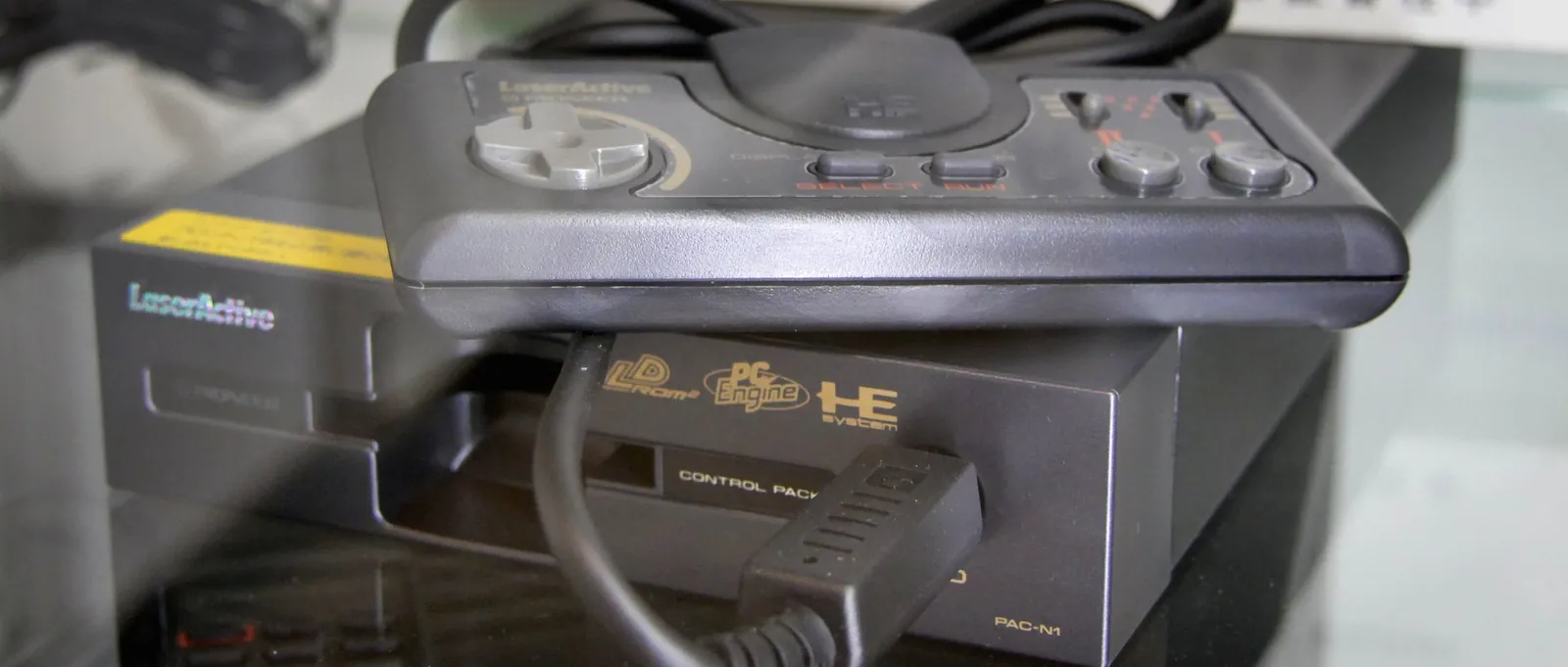
From the 1990s, consoles became a standard of living room furniture. The industry takes this development into account and produces devices that look less like consoles and adapt instead to the current look of classic consumer electronics. For the first time, devices whose essential tasks are video games are marketed to adults. This is a side-show of a development that can also be observed in classic consoles – the advertised target group gets older together with the medium. This insight is crucial for the development of video games from a fleeting fashion to an established social factor.
According to the zeitgeist, these devices are marketed as multimedia playback stations. This fails because the machines (beside their capabilities as game consoles) are limited to low-quality video sequences, images and low-interactivity applications.
Generation 5 - Gold miners and revolutionaries
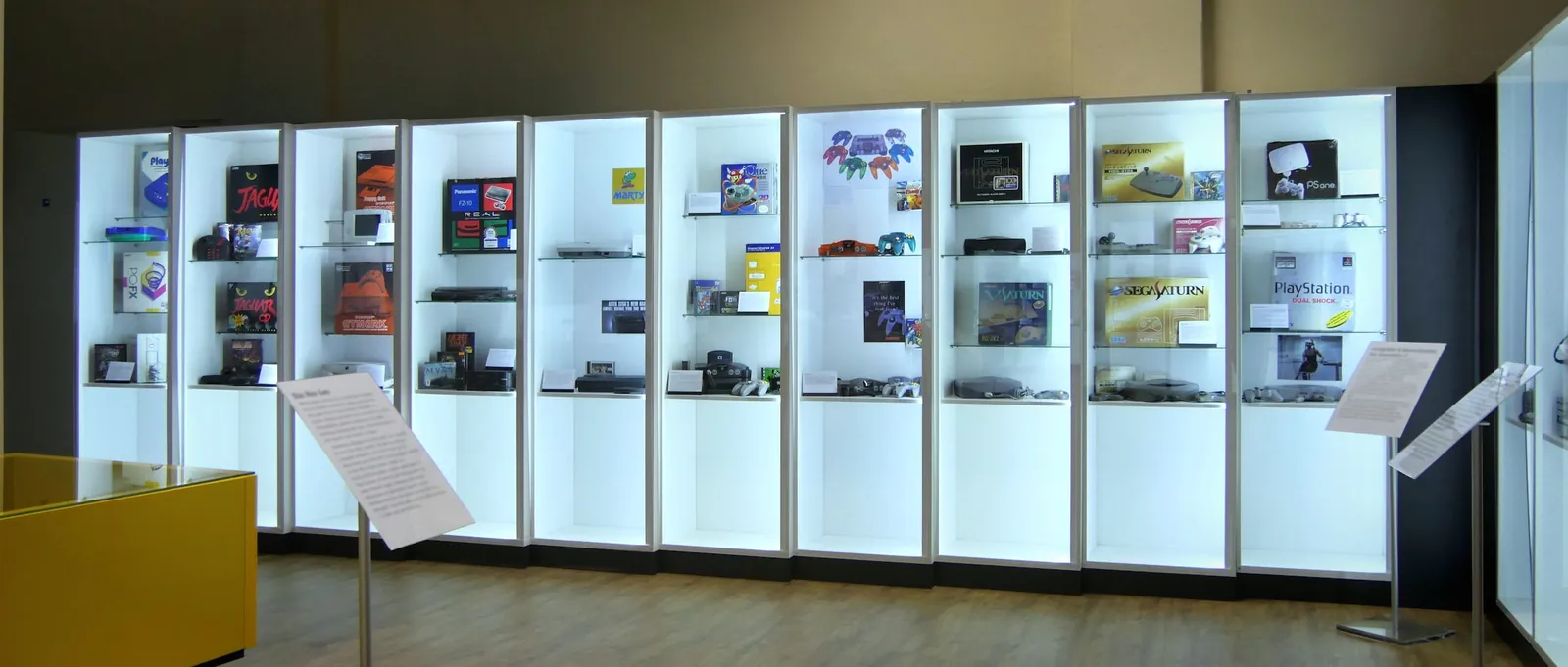
The fifth generation of game consoles is characterized by numerous upheavals. Games in three-dimensional space become standard, CD-ROMs replace the modules that have been established for twenty years as a medium and allow complex film sequences, voice output and music in CD quality with their tens of times higher storage space.
Numerous manufacturers try to copy the success Sega has with the Mega Drive; never again are there so many different consoles on the market at the same time as in the fifth generation. Almost all are flops.
Sega itself miscalculates with the release of the Saturn and will no longer recover from this blow. Meanwhile, a failed collaboration between Nintendo and Sony leads Sony to develop its own console with PlayStation and to become the industry leader almost overnight.
Copy stations, flash and cheat modules
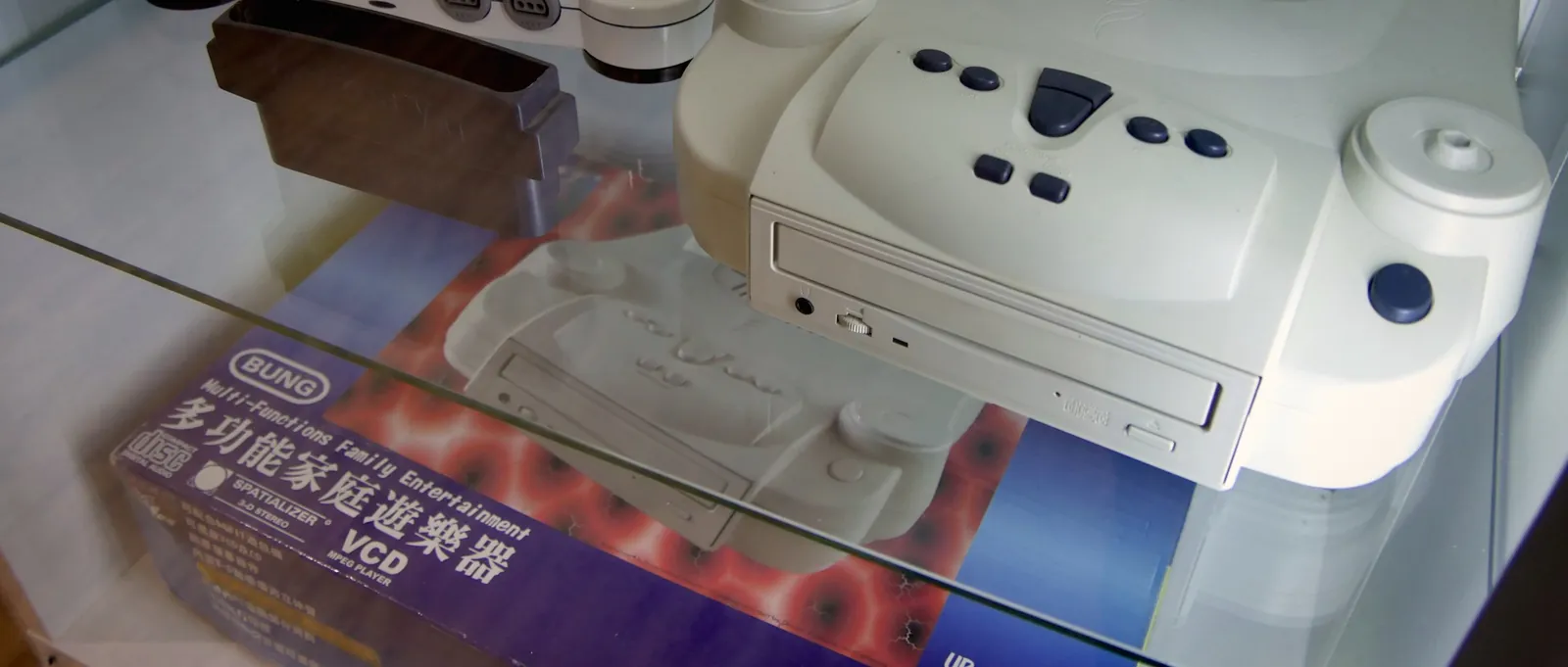
A supposed difference between home computers and consoles is that the modules for Nintendo, Sega and co. cannot be copied. In fact, this is possible from the 1990s onwards. Unnoticed by a wider public, copy stations that are plugged between console and module appear and with which the game data can be transferred to a floppy disk or (later) CD-ROM.
These stations are initially a niche product, especially since Nintendo is the only large manufacturer from the fifth generation of consoles that still offers modules. But Nintendo in particular sees a potential problem in the copiers: the data volumes of the modules are rather small, at the same time Internet connections are getting faster and faster, which allows a convenient spread of the pirate copies among players. Nintendo sues manufacturers worldwide. This aggressive strategy is successful, until today only a few players are aware of the existence of the copying stations.
Generation 6 - The End of Console Wars
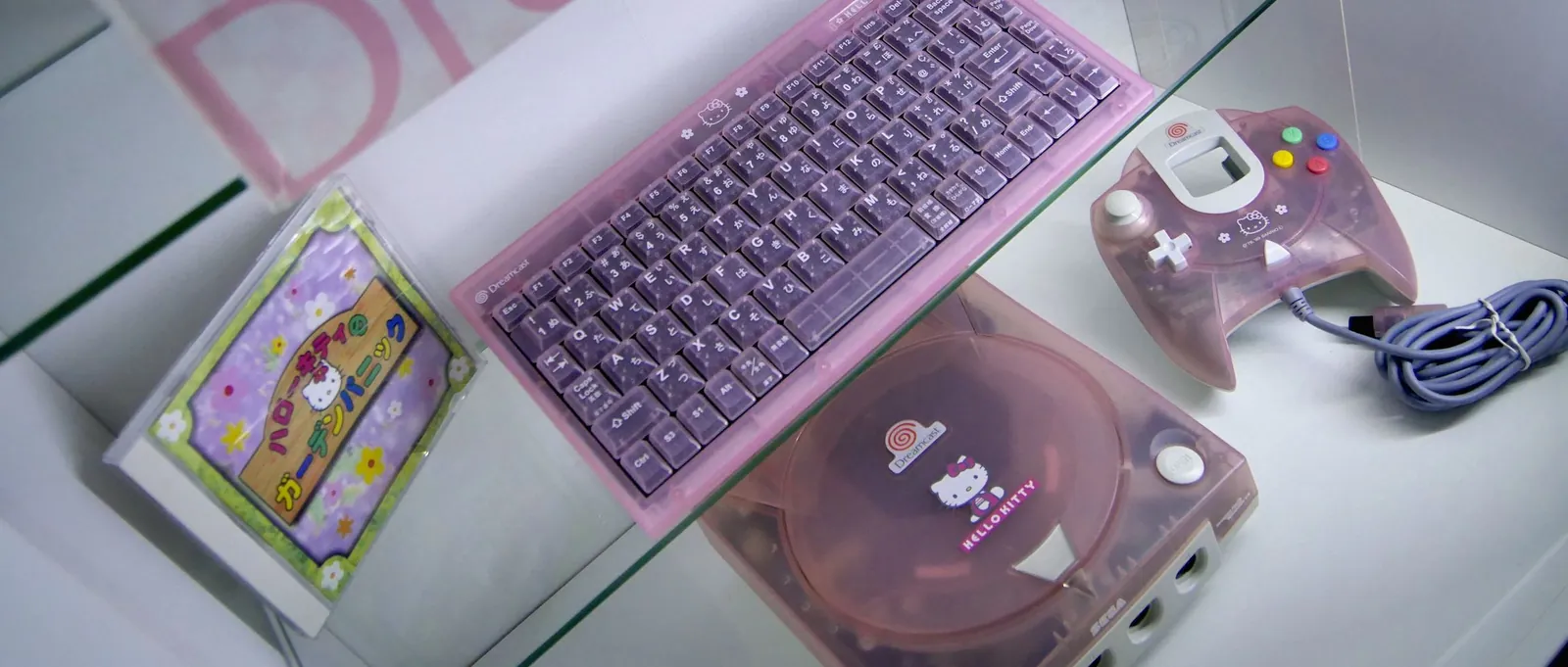
Sega is the first manufacturer to introduce a sixth generation console with the Dreamcast, but after the previous flops, the beaten-up company no longer has the reserves to be able to withstand the soon-to-appear Ps2. Sony’s console is still the best-selling console, while Nintendo succeeds with the GameCube. Microsoft joins as a new console manufacturer, but apart from that, the field is clear: at the end of this generation, only the three companies that still dominate remain.
This marks the end of the console wars. The technology is now so standardized that differences between the machines no longer matter very much anyway, and generally consoles become more similar to PCs, through disks in the gigabyte range and online functions.
This also applies to the games; many no longer appear exclusively for a single console, but for PCs as well as for XBox, GameCube and PS 2.
16- and 32-bit computers - Digital artists, flourishing scene
The 16/32-bit era brought multimedia-capable systems from Amiga, Atari and Acorn. Topics include hardware, graphics, sound, games and gaming culture in Germany, including the piracy scene. A.Eon and ACube continue to produce Amiga computers, while Hyperion develops AmigaOS. This section follows chronology as well as technical distinctions, covering roughly 1985, when the Atari ST and Amiga 1000 appeared, to 1993, with overlaps into the 8-bit era.
Playing in microcosm and macrocosm - Mobile Gaming and Immersion
Video games and their cultural codes shape our world today. There are several reasons: On the one hand, there have been video games for more than 40 years, which have become an important part of their life story for many people. On the other hand, video games are no longer limited to the classic setup (television, console, module, input device), but can be found in many different situations. Today, a lot is being played on mobile devices, but also tries to involve players deeper into the event by connecting their bodies to the game – up to virtual reality and elaborate simulators.
Immersion through alternative periphery
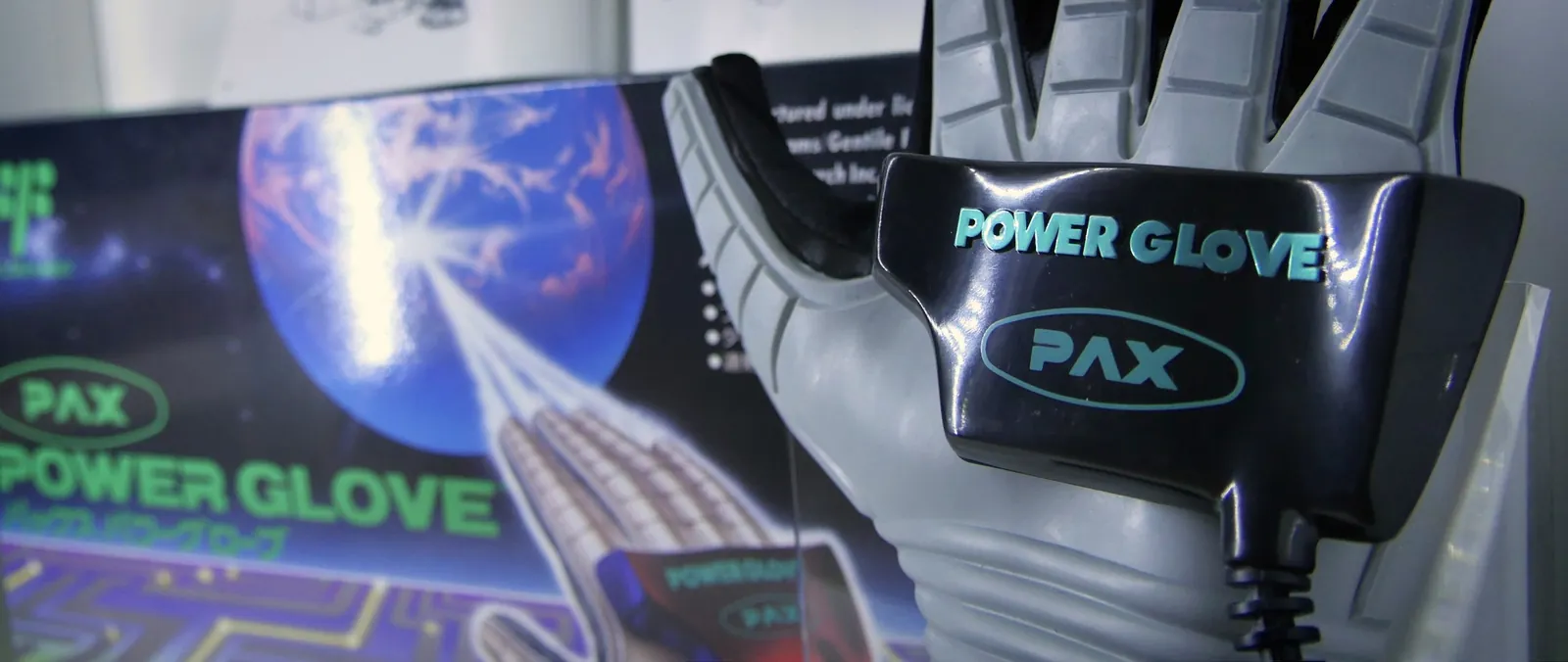
While the typical video game control with directional keys and fire buttons develops very early, there are also numerous alternative control methods through the history of the game consoles. These are not only controller variants adapted to the game events, such as paddle or trackball. Partially, it is specially shaped controllers that correspond to the theme of the game, but often also attempts to involve the whole body of the players.
Behind it is the effort to create a control that feels more natural to create a more intense, captivating sense of play. This effort for immersion is sometimes more, sometimes less effective, because while the idea is as old as the history of video games, the technology is often not yet ready to implement the concepts efficiently. Only in the 2000s did Nintendo achieve motion control with the Wii that was mature enough for mass adoption.
Generation 7
The console market is determined in the seventh generation by the three remaining large companies. Their machines are now factory-equipped for online functions, Xbox 360 and PlayStation 3 present graphics in HD resolution, but the essential innovation in this generation is the Wii controller system. For the first time, a console relies entirely on a control system via motion sensors – a new gaming experience that opens up new layers of buyers and brings in millions. Sony and Microsoft will soon follow with PlayStation Move and Kinect, but the Wii sells more often, despite the weaker graphics.
While in the previous generation, customers can mainly select the exterior of the console, Xbox 360 and PlayStation 3 are configurable with regard to their hardware and are produced with different sizes of internal hard drives – the similarities of the consoles to highly bred gaming PCs are increasing.
Generation 8
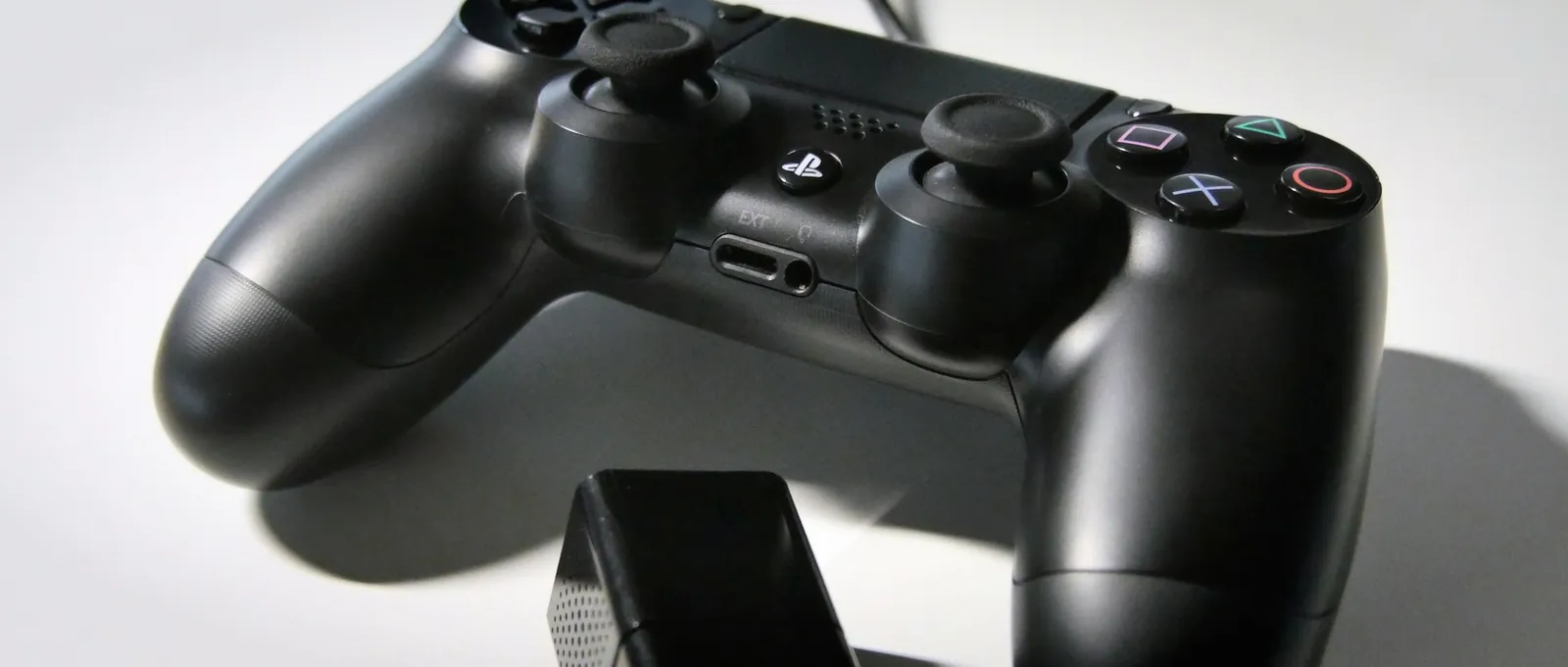
In the eighth generation of consoles, media playback and online functions were part of the usage concept. For example, PlayStation 4 made it possible to transfer game scenes via Twitch. This extended the role of the console beyond playing on your own screen.
Next Gen – Model Care and New Generations
The more powerful PlayStation 4 Pro and Xbox One X versions continued the respective gaming platforms in 2016 and 2017. However, the PlayStation 5 and Xbox Series X and Series S followed a new platform generation in 2020.
The background text Next Gen – Model maintenance and new generations explains the differences and contains the sources for these model starts.
Mobile Gaming
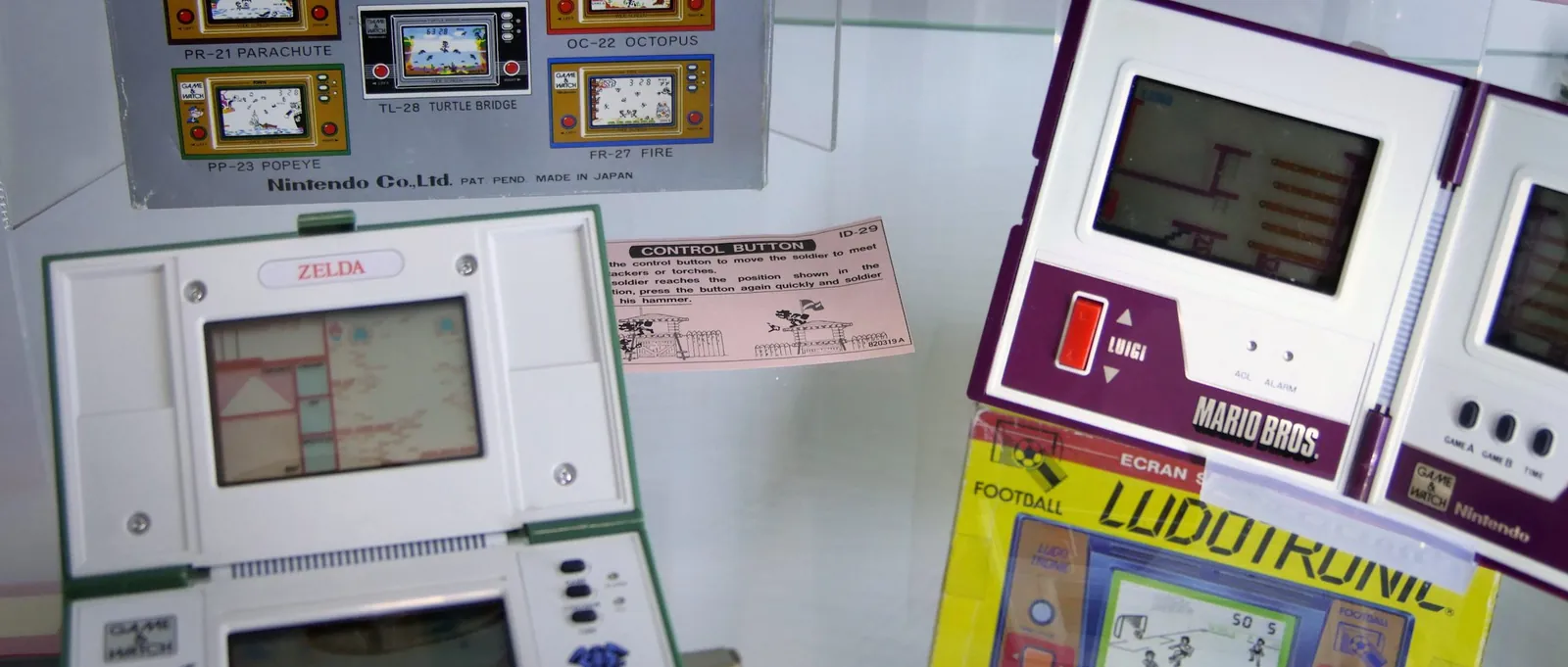
In historical terms, humans became sedentary only recently. But people have always played games, so the idea of portable games emerged early. Dice have been known for five thousand years, and chess sets compact enough for travel since the Middle Ages.
Pegged travel chess sets also appeared from the 18th century. They were designed to stop the pieces shifting when jolted. Increasing mobility from the 18th century made this necessary: travel time became a widespread and, for many people, new experience. Passengers wanted something to do while sitting passively in jolting carriages or rolling ships as they travelled from place to place.
Until the beginning of the electronic age (and still today), countless games whose purpose is to kill time alone or with fellow players appear.
Virtual reality
Virtual Reality is not much more than a promise for decades. The attempt to immerse yourself in the worlds on the monitor via a motion-sensitive headset comes from the desire not only to be able to experience a game experience more intensely, but to actually live it – complete immersion and ultimate escapism.
While it has been possible for a long time to build up a second life on the computer – through online role-playing games and social media – the implementation of VR technology is hampered for years by too low computing power.
When games become three-dimensional in the 1990s, Virtual Reality also becomes a fashion term for a short time, also fueled by the popularity of the holodeck in the TV series Star Trek – The Next Generation, but all experiments for the mass market fail. Only in the 2010s is the technology far enough to enable affordable and functional glasses.
Simulators

All successful games at the beginning of video game history are simulations, starting with tennis in Pong. Manufacturers of arcade machines meet this early on and offer devices whose control elements are modelled on the originals. For home use, special controllers will soon appear that take over this feeling of play, but due to financial and spatial limitations, complex simulators involving the whole body remain a domain of arcades and professional training centers.
There, however, players have the opportunity to make an experience through recreated or even authentic cockpits, which makes them part of the game already decades before Virtual Reality.
More dimensions - The delimitation of PCs and mobile devices
The PC, which became more and more popular in the 1990s, was not a product of a single manufacturer, but consisted of various alternatives, such as Linux or OS/2. The modular design of the PC made it possible to customize and replace the hardware individually, which lowered prices and made it a mass product.
The technical development of the PC was rapid and focused primarily on two aspects: miniaturization (and associated mobility) and the extension of the representation and interface to the three-dimensional space. Miniaturization led to the PCs becoming smaller, lighter and more powerful, which encouraged the development of laptops, tablets and smartphones.
The expansion of the three-dimensional space meant that the graphics, sound and control of the PCs became more realistic and immersive, which greatly expanded the possibilities for game developers.
The pioneer of a technological revolution was the Internet, which enabled the networking and communication of PCs and created completely new forms of online games, social networks and digital platforms.
Market adjustment by IBM-Compatible
When the market flourished with IBM-compatible devices, many home computer manufacturers could not follow suit with attractive devices and withdrew or had to file for insolvency. For the standard PC there are more and more plug-in cards and innovation is still noticeable today, especially in the field of graphics cards.
Portable computers
Portable computers (laptops) have been around for a long time, but it takes two decades for them to be cheap for everyone.
Personal assistants
Small portable computers became the personal computers par excellence, developing from PDAs (Personal Digital Assistant) into modern smartphones and tablets.
Retro computing
Countless users and developers continue to work with home computers of the 1980s, maintain, repair, write new software and develop fresh hardware. In one room, the museum deals with new developments.
Modern small computers such as the Raspberry Pi are powerful enough to emulate 8-bit and 16/32-bit computers, including their custom chips. Emulators also run on tablets and smartphones, or in web browsers using JavaScript.