Magnavox Odyssey

Summary
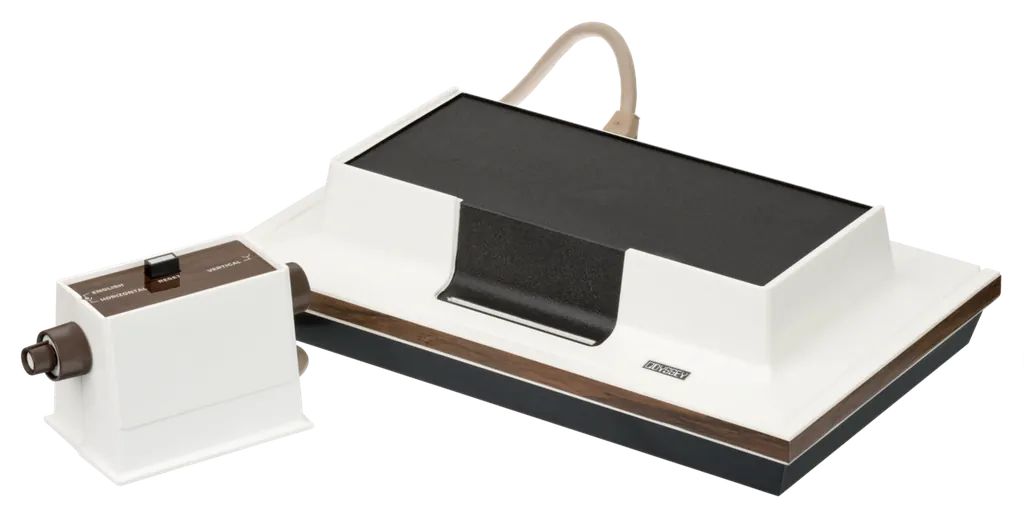
In 1966, Ralph Baer - The father of the home consoles (1922–2014) had the idea of using television sets to play games. In 1969, the German-born inventor, who had emigrated to the USA, presented his “Brown Box” to various television manufacturers. After initial hesitation in the industry, Magnavox acquired the licence in 1971 and produced the Odyssey, the first commercial home video game console, launching the video game industry.
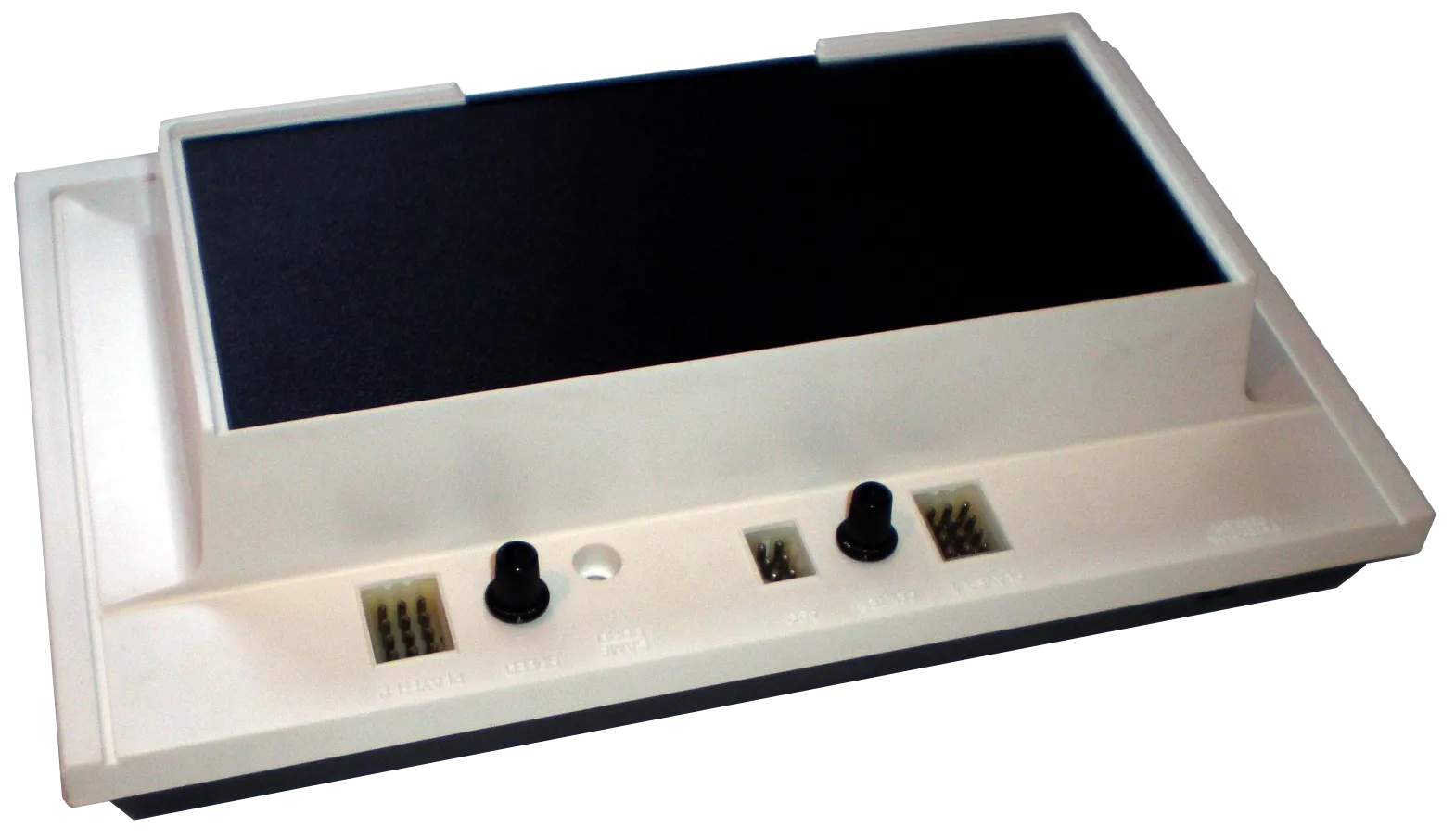
The few white dots and blocks on black background are represented by only 40 transistors. Depending on the version of the Odyssey, ten to 28 games can be played with various additives such as slides for the TV, dice or chips, with the variants often only differ by the used slides.
The Odyssey exhibited in the museum was produced on 28.01.1975 and thus belongs to the slightly improved second production batch. It offers 28 games with 12 cards, with only the first six pieces in the pack. The other cards are sold individually or in a package. The console costs around $100 at the time. It is estimated to have sold between 100,000 and 300,000 times.
| Map | Games |
|---|---|
| 1 | Table tennis |
| 2 | Ski, Fun Zoo, Percepts |
| 3 | Tennis, Analogic, Baseball, Hockey, Football, Soccer |
| 4 | Cat and Mouse, Football (Running), Haunted House, Invasion |
| 5 | Submarine, Invasion, Soccer, Wipeout |
| 6 | Roulette, States, invasion |
| 7 | Volleyball |
| 8 | Basketball, handball |
| 9 | Shootout, Dogfight, Prehistoric Safari |
| 10 | Shooting Gallery |
| 11 | Basketball (never been distributed) |
| 12 | Interplanetary Voyage |
Family tree
- This objectMagnavox Odyssey
- Successor · not in the collectionMagnavox Odyssey 100
Background
https://www.heise.de/hintergrund/Magnavox-Odyssey-Erste-Spielkonsole-wird-50-Jahre-alt-7121128.html
Connections in the collection
In the exhibition concept
- Generation 1 · Area Konsolen 1, Section 6
- The Magnavox Odyssey · Area Konsolen 1, Section 4
Mentioned in
Keywords
Acquire the complete collection.
The collection is offered as a whole. The inventory lists show which objects are included.