Apple/Bandai Pippin ATMARK

Summary
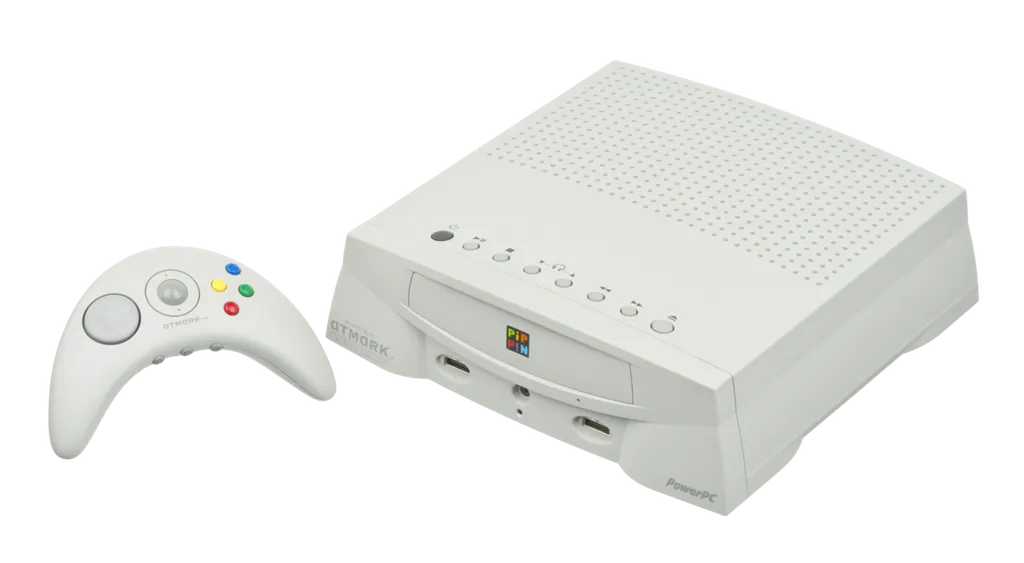
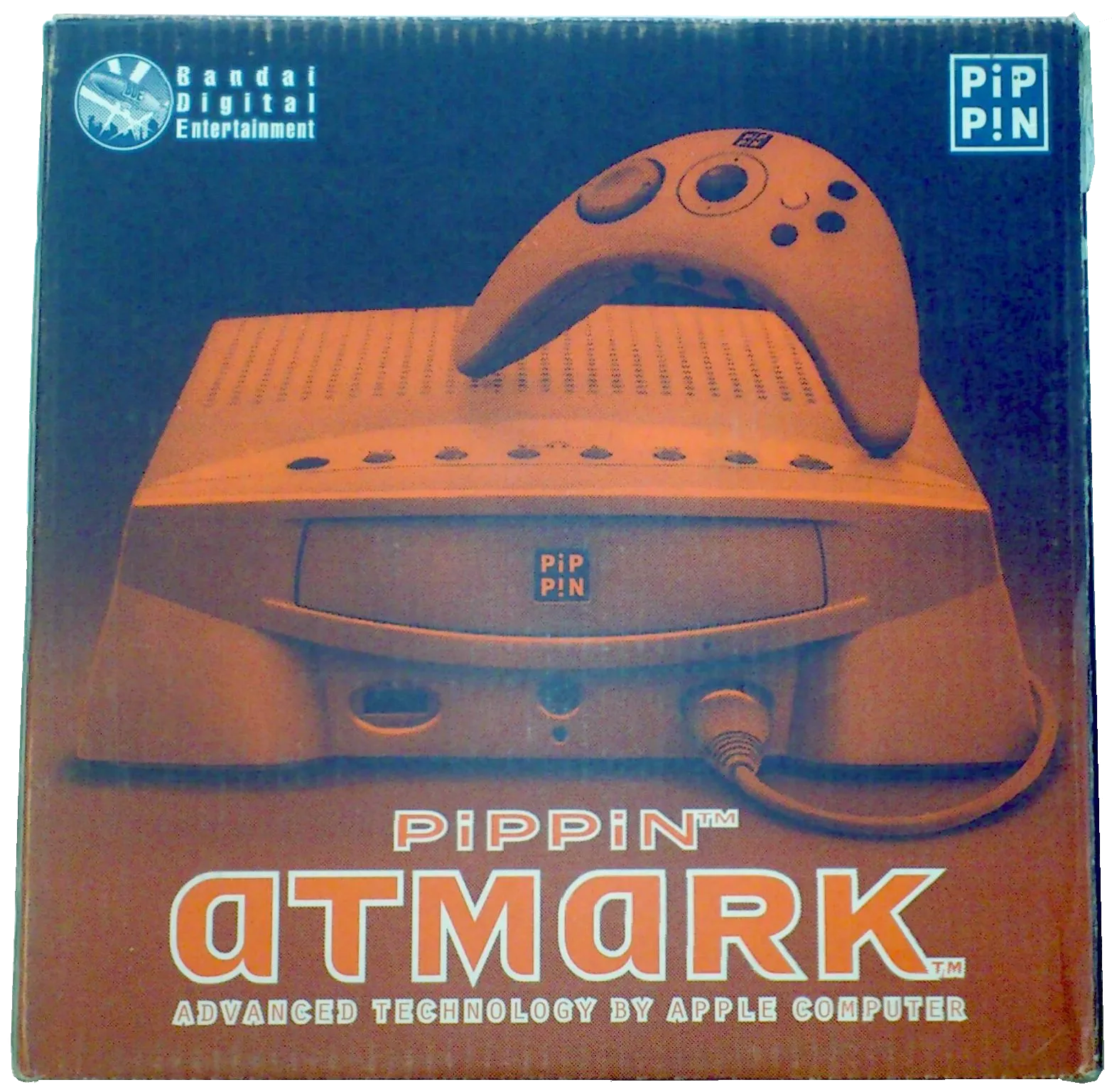
Apple designs the Pippin (named after an apple variety) as a standard that other manufacturers are supposed to build under license. The console is not only designed for video games, but, quite in the trend of time, also basically for multimedia content. The technology is based on Apple’s current Mac hardware at this time. The Japanese manufacturer Bandai, who already has experience with console peripherals, but not with his own machine, is entering the business. The Pippin Atmark is published in Japan in March 1996 in a light housing, and in the USA in late 1996 in black.
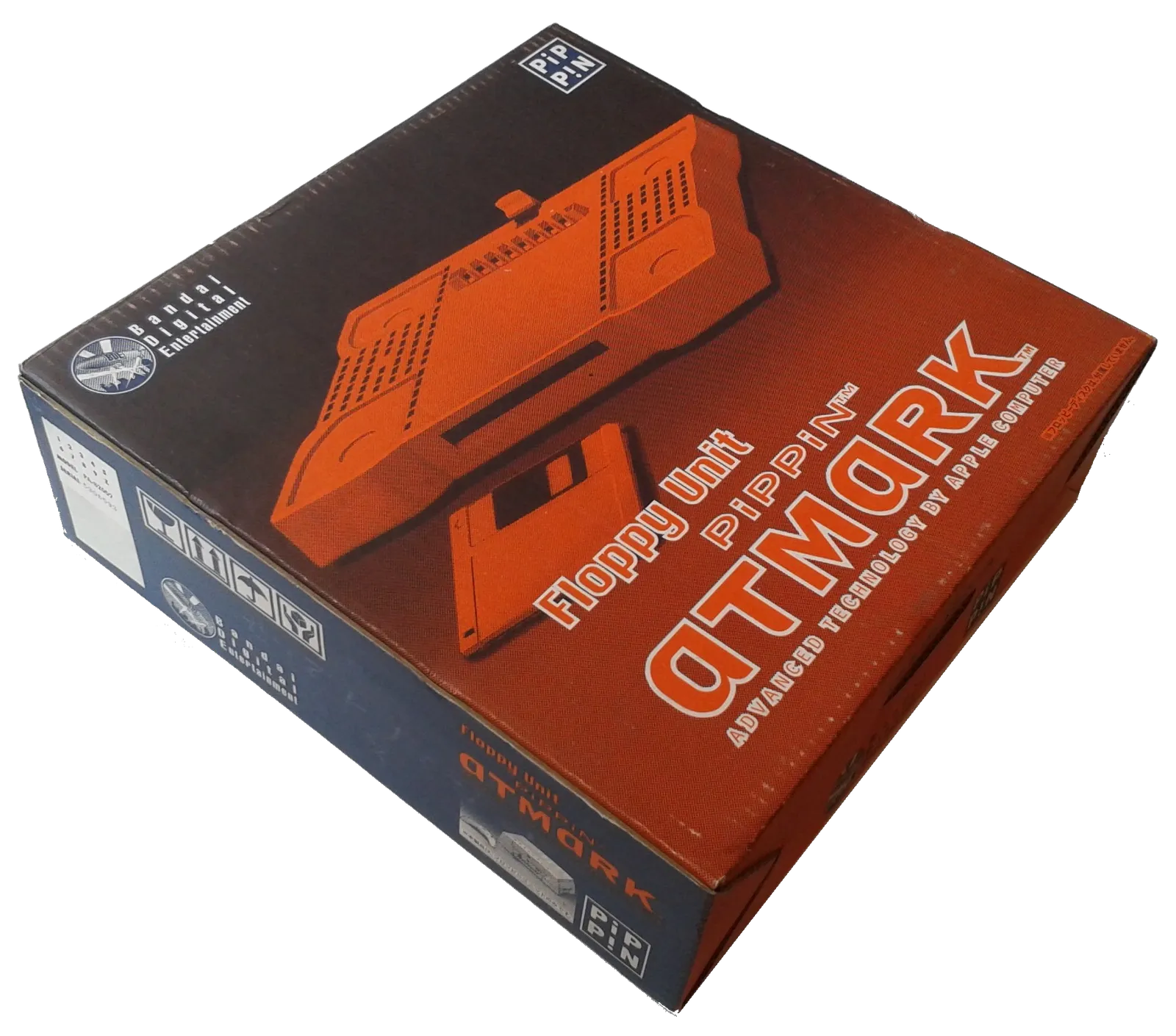
The device can be retrofitted with keyboard, mouse and disk drive, but a hard disk is not intended. Pippin games are therefore usually also running on Macs due to the similar technology, but vice versa this is not possible.
The console was more expensive than the competitors, but not better in quality. The Pippin became a failure that almost ruined Bandai.
Detailed description
In 2016, there were rumors again that Apple wanted to enter the gaming market. Already in the 1990s Apple had tried this before, with a multimedia platform called Pippin (the name comes from the apple variety Newton Pippin). Market research showed the emergence of multimedia content and Apple planned a multimedia station with CD drive based on Power Macintosh hardware (1994).
Apple always regarded the Pippin as a specification that was to be licensed to other manufacturers. Even Apple did not want to build its own devices, perhaps because it was not so sure. (There are statements from Apple that if the platform was successful, its own devices were planned.) So only the Bandai Digital Entertainment Group, a Japanese entertainment giant, had great experience with the marketing of Mighty Morphin Power Rangers. Bandai built a real console based on the specification.
At first the machine appeared in March 1996 under the name Pippin ATMARK (Pipin Attomāku) in Japan in a light case, at the end of 1996 in the USA with a black case, called @WORLD (also known as Pippin@World). Later, the @WORLD in a black case followed in Japan. The content of the machines is the same, the black version is rarer. There was a white/black AppleJack controller and a chic wired control pad with trackball.
Inside the Pippin you will find a RISC PowerPC 603 clocked to 66 MHz and a quadruple CD drive on the internal SCSI bus. The device in the hand feels like a real computer from the weight. A hard drive was never intended. Although the Pippin can be retrofitted with keyboard, mouse, memory, modem and floppy drive, the console cannot be upgraded to a complete Macintosh. An external SCSI connector is missing and even if you connect one, you cannot boot from an external SCSI drive with the standard ROM.
Games and multimedia content were distributed only on CDs signed with an Apple key, known as “Pippinized” software. Apple no longer supports this process, so new Pippin software cannot legally be produced this way. Pippin titles generally also run under Mac OS, but the reverse is not true: Mac OS software must be adapted. Buyers initially saw the Pippin as an inexpensive mini-Mac, then quickly discovered its limitations. At 599 USD, it was relatively expensive and faced strong competition from Sega’s Saturn, Sony’s PlayStation and low-cost Windows PCs. Developers consequently showed little interest in Pippin releases. The failure almost ruined Bandai. Around 100 titles exist; today they are expensive, sometimes matching the console’s original price. Philips had already demonstrated the difficulties of dedicated media players with the CD-i. Apple and Bandai’s Internet strategy was forward-looking but unsuccessful. With only 6 MB RAM, running a browser such as Netscape 2.0 smoothly was unrealistic. Users also had to commit to specialist Internet provider PSINet Inc. for at least 6 months. At a basic rate of 25 USD, that meant a minimum of 150 USD for the six months, too much for most users.
Family tree
- PredecessorBandai Playdia
- This objectPippin Atmark
Sources and further links
Connections in the collection
In the exhibition concept
- Generation 5 · Area Konsolen 2, Section 9
Mentioned in
Keywords
Acquire the complete collection.
The collection is offered as a whole. The inventory lists show which objects are included.