Lane: computers · Area A · Section 1
Generations of computers
Information panel: Smaller and smaller switches
Classifications Source 1, Source 2
1.1 Relay calculator
- Panel: Z3 (1941) is the successor of the Z2 and is considered the first programmable relay digital computer. Previously, all computers were connected to a fixed program (“wired”) and no universal computer, Source 1, Source 2
- Between 1942 and 1945: Z4 is a Turing complete computer with relay
- Panel: Z4, Source
- Object: Relay (relay relay)
- Media station: relay sound in a sound station
- Panel: Life and work of Konrad Zuse
- Media station: Video with interview/documentation with Konrad Zuse, source
1.2 Tube Calculator
- Panel: ENIAC is the first computer in the USA, and the first to use tubes in 1944, so it’s fully electronic, source
- Panel: vacuum tube and the first “bug”, Source
- Panel: Is Z3/Z4 or ENIAC the first computer? (conditional jumps), source
- Object: Genuine Zuse-22 tube
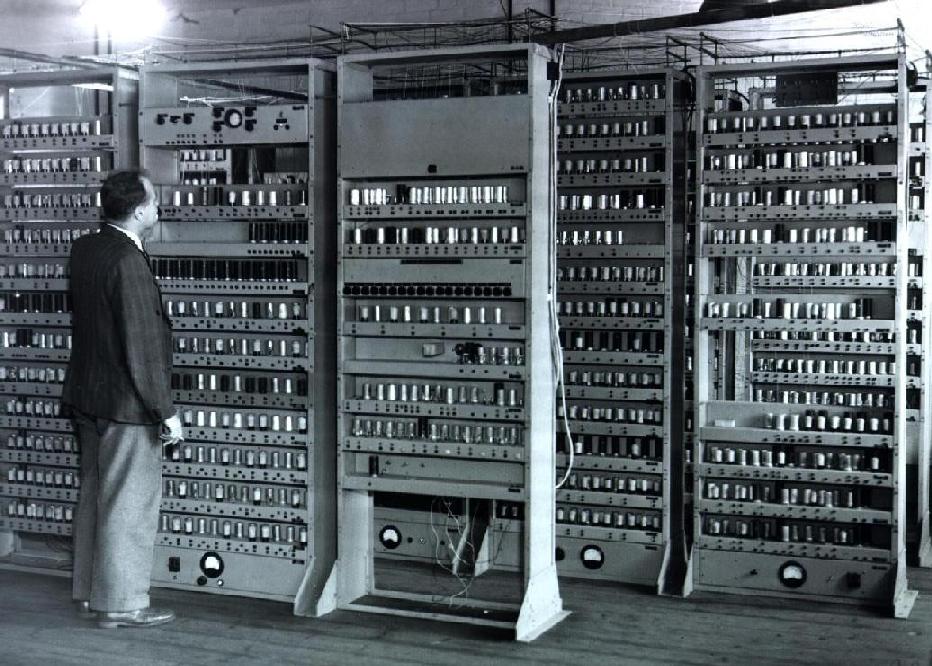
- Panel: EDSAC (England) is 1949 a tube computer that processes stored programs, source
- Media station: Simulation of OXO (noughts and crosses, aka tic-tac-toe), 1952, the first computer game on EDSAC, source, programming

1.3 Transistor calculator
-
Panel: The Manchester Computers 1953 are the first transistor computers
-
Object: Relay, tube and transistor in size comparison
-
Media station: switching time compared (speed of 1000 switching operations visualize, relay: 100 ms, tube: 0.1 ms, transistor: 0.001 ms, IC: 0.00001 ms (10 ns))
-
Object: IBM Standard Modular System (SMS)
-
Panel: IBM Standard Modular System, source (end of the 1950s)
-
Panel: as concept idea: list of SMS modules, Source
-
Object: IBM Solid Logic Technology (SLT)
-
Panel: IBM Solid Logic Technology, source (1964 for IBM System/360 Series and related machines), SLT Module/Board List
1.4 Integrated circuits (IC)
74xx
- Object: Showcase with different 74xx chips (October 1964 for military, Q3 1966 is massware)
- Panel: Integrated circuit (IC)
- Panel: Texas Instruments 74181 Arithmetic Logic Unit (ALU) Chip (1970)
- Panel: Table of https://www.mikrocontroller.net/articles/74xx
Minicomputers
- Panel: Minicomputers as the first affordable company computers
- Panel: Digital Equipment Corporation (DEC) launches the PDP-8 in 1965, a real mini-computer, Text
- Object: VAX (1987)
First home computer
- 1970/1971 Information panel: John BlankenBAKer’s Kenbak-1
- Media station: Kenbak simulator, tablet
- [Exponate: Kenback replica] Reproduction with Arduino or Kenbak kit
- Media station: Kenbak tutorial, tablet
Xerox Alto
- Panel: Xerox Alto (1973), first computer with graphical interface, data and history, source 1, source 2, source 3
- Media station: Video of the Xerox GUI Source
- Gaming station: Xerox emulation, source, keyboard, mouse and screen

1.5 Intel CPU 4004/8008
Intel CPUs
-
Panel: Intel 4004, the first commercial microprocessor (November 1971)
-
Panel: Four-Phase Systems AL1 vs. Intel 4004, what was the first microprocessor?
-
Panel: hardware architecture (CPU, bus,…), Source
-
Panel: software architecture, Source
-
Panel: Intel 8008, the first 8-bit CPU appears (1972)
-
Panel: The “sample calculators” Intellec-4 and Intellec-8, Source 1, Source 2
-
Panel: Intel 8080
-
Panel: Short Intel History Source


Home computers
-
1973 Information panel: Micral N, Source
-
Media station: tablet with user manual, Source
-
1974 Information panel: SCELBI (Intel 8008), heart attack story, first machine language programming book
-
Panel: Advertising from amateur radio magazine QST, source 1, source 2.1 or source 2.2
-
Media station: tablet with manual, Source
-
Panel: Mark-8 Minicomputer Cover of the electronic magazine Radio Electronics, source
-
Panel: Intel 8080 (1974) is the greatly improved successor of the Intel 8008 CPU.
1.6 Theory
-
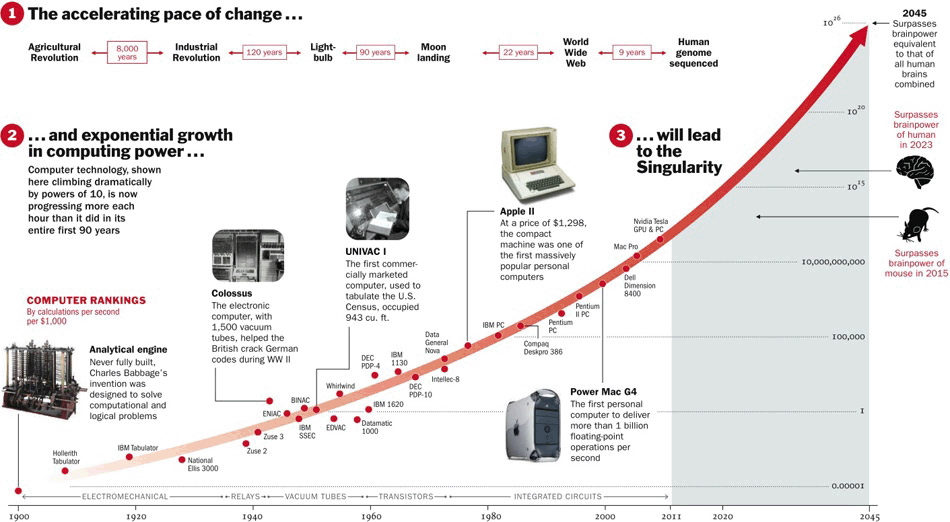
Panel: or media station: timeline of early computers, source
-
Matrix calculation, code decryption
-
Panel: Computers in war, Source
-
Panel: The terms “hardware” and “software” come from waste management, source
-
Panel: Von Neumann architecture, Source
-
Panel: characteristics of early computers (floating-point arithmetic, binary, electronic, programmable, Turing-complete), source
-
Panel: ASCII code (1963), Source
-
Media station: ASCII type
