Sega Mega Drive

Summary
At the time of its release, the Mega Drive/Genesis is technically clearly superior to Famicom, yet the superiority of Nintendo prevents Sega from gaining significant market shares.
Genesis will only be a success when Sega leaves all marketing freedoms to the American arm of the company. One of the most important decisions of the Americans is to sell the console along with the hit game Sonic the Hedgehog. Sega also runs an aggressive advertising strategy that directly attacks Nintendo.
Sega’s target groups are not, as with Nintendo, children, but teenagers, which is also reflected in the games, some of which are significantly more violent and are an important factor in the introduction of self-regulation in the game industry in 1994.
Sega extended the life cycle of the Mega Drive through extensions and granted licenses to other manufacturers. Thus, over decades different versions and new editions appeared. In 2017, AtGames sold the licensed Sega Genesis Flashback. Sega itself picked up the console in 2019 with the Mega Drive Mini. These later retro devices show how long the platform worked beyond its original market phase.
Detailed description
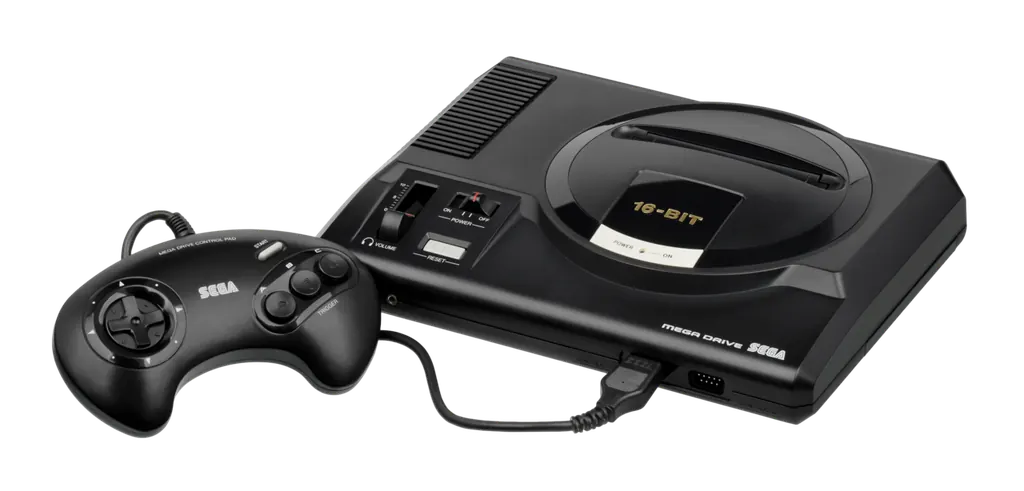
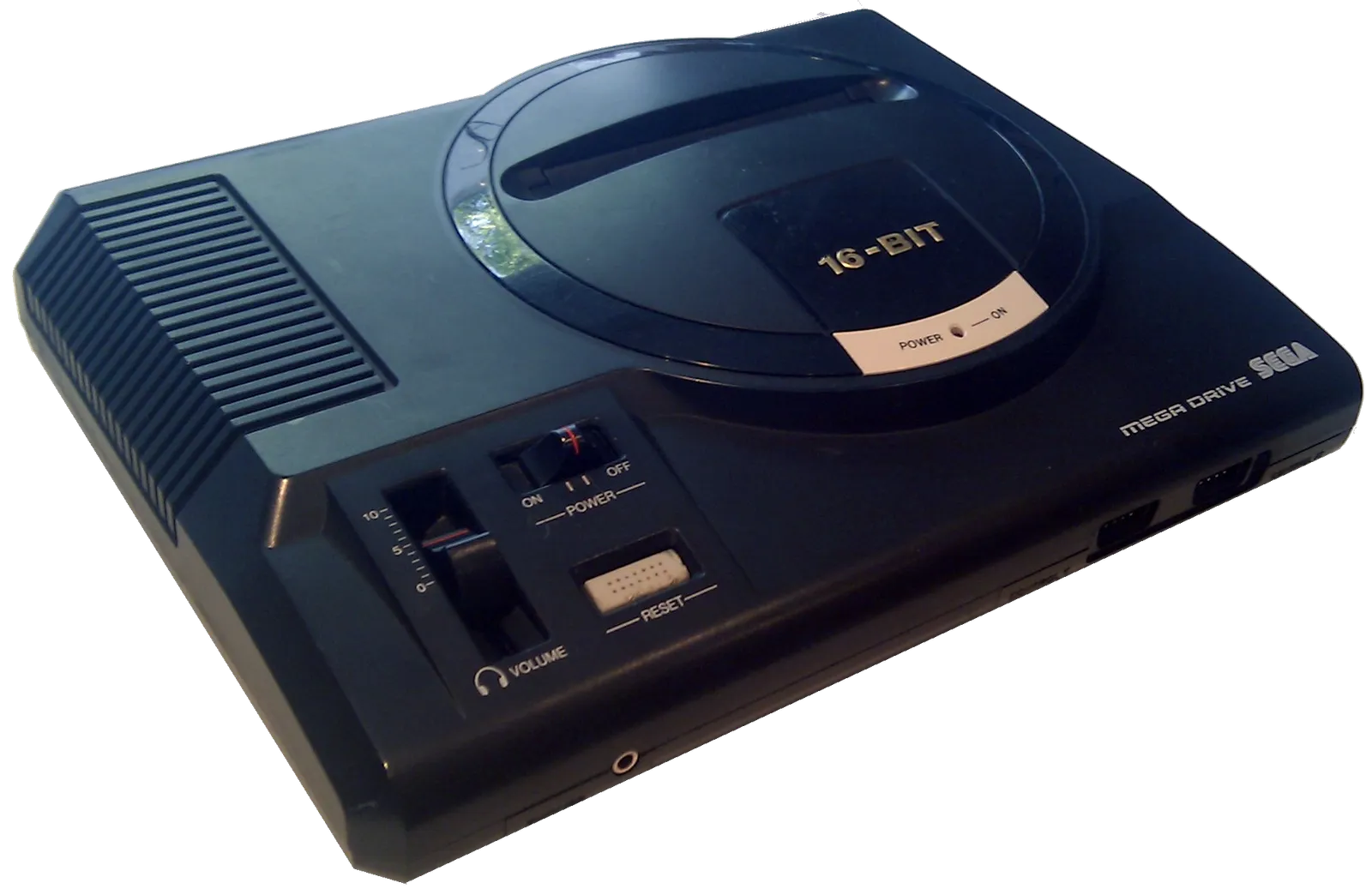
The Mega Drive (Sega Genesis in North America) is a game console of Sega Corporation, Japan. It is one of the game consoles of the 4th generation (16-bit era). There are a number of variants of Mega Drive.
Sega released the console in Japan in the fall of 1988. She competed there first against the Nintendo Entertainment System (NES) and the PC Engine of NEC. It was technically superior to these two 8-bit systems, but was never very popular in Japan. This was also due to the fact that two years after the Mega Drive release competitor Nintendo entered the 16-bit competition with the Super Nintendo Entertainment System (SNES).
In North America, where Sega released its console in 1989 under the name Sega Genesis, the system sold much better. Also in Europe (published at the end of 1990) it could stand up better than in the Japanese market. The Sega Mega Drive was also very popular in Brazil, where it was marketed in a licensed version by Tec Toy.
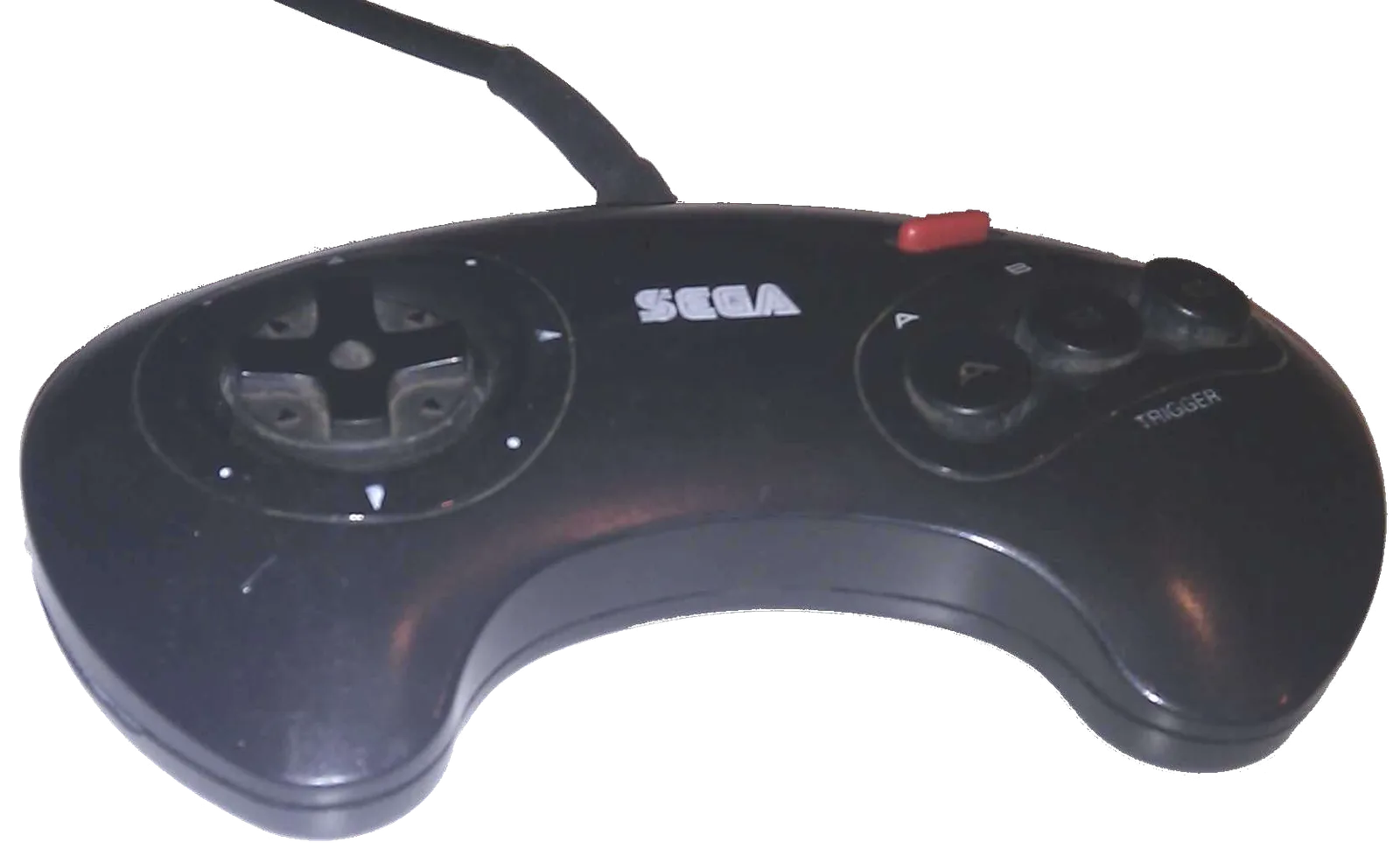
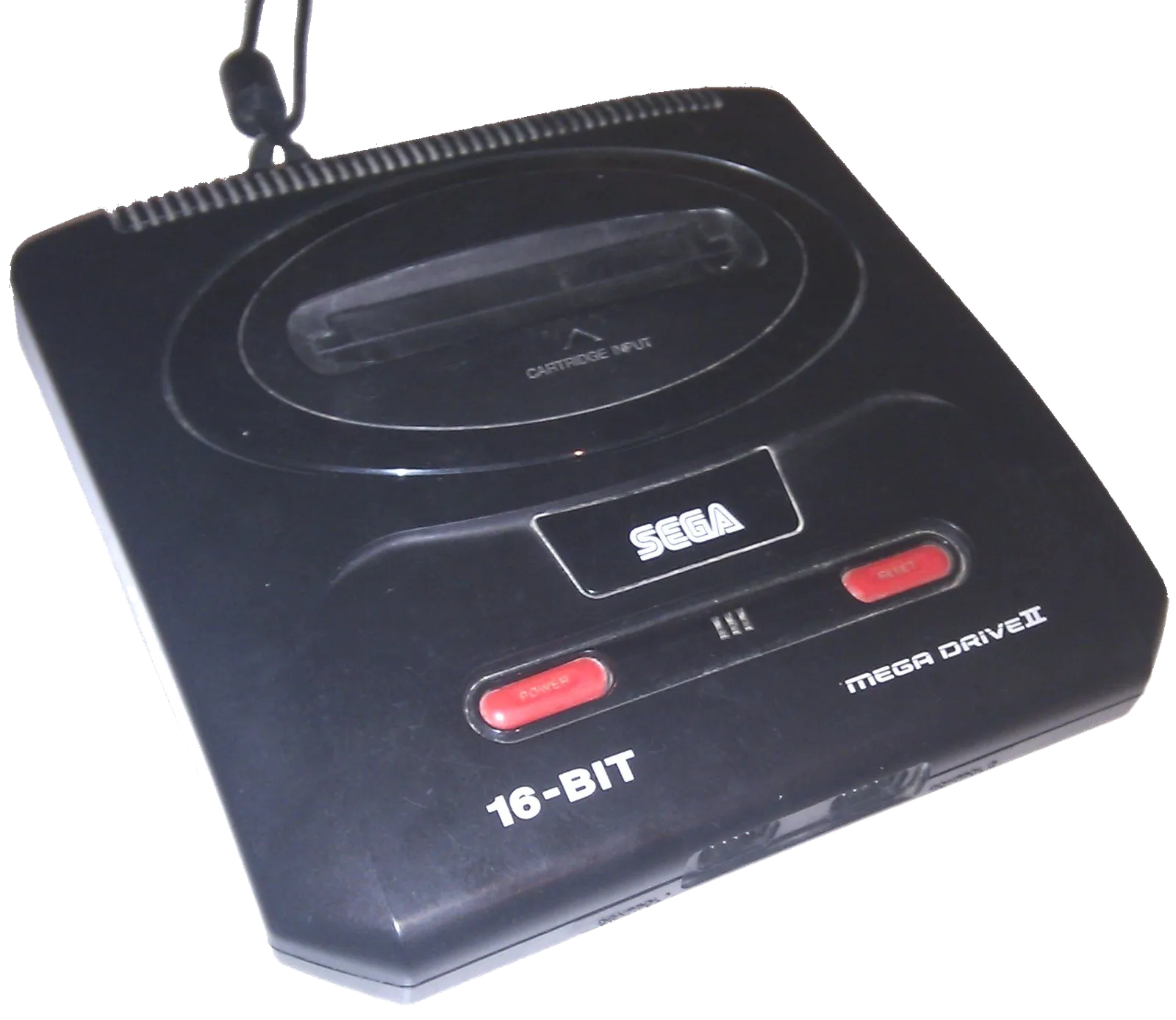
In 1993 the visually redesigned Mega Drive II appeared. It was more compact than the original version, but did not have an RF and a headphone output. It is interesting that the Mega Drive II has a new gamepad by default, which has six action buttons (the original gamepad version has only three).
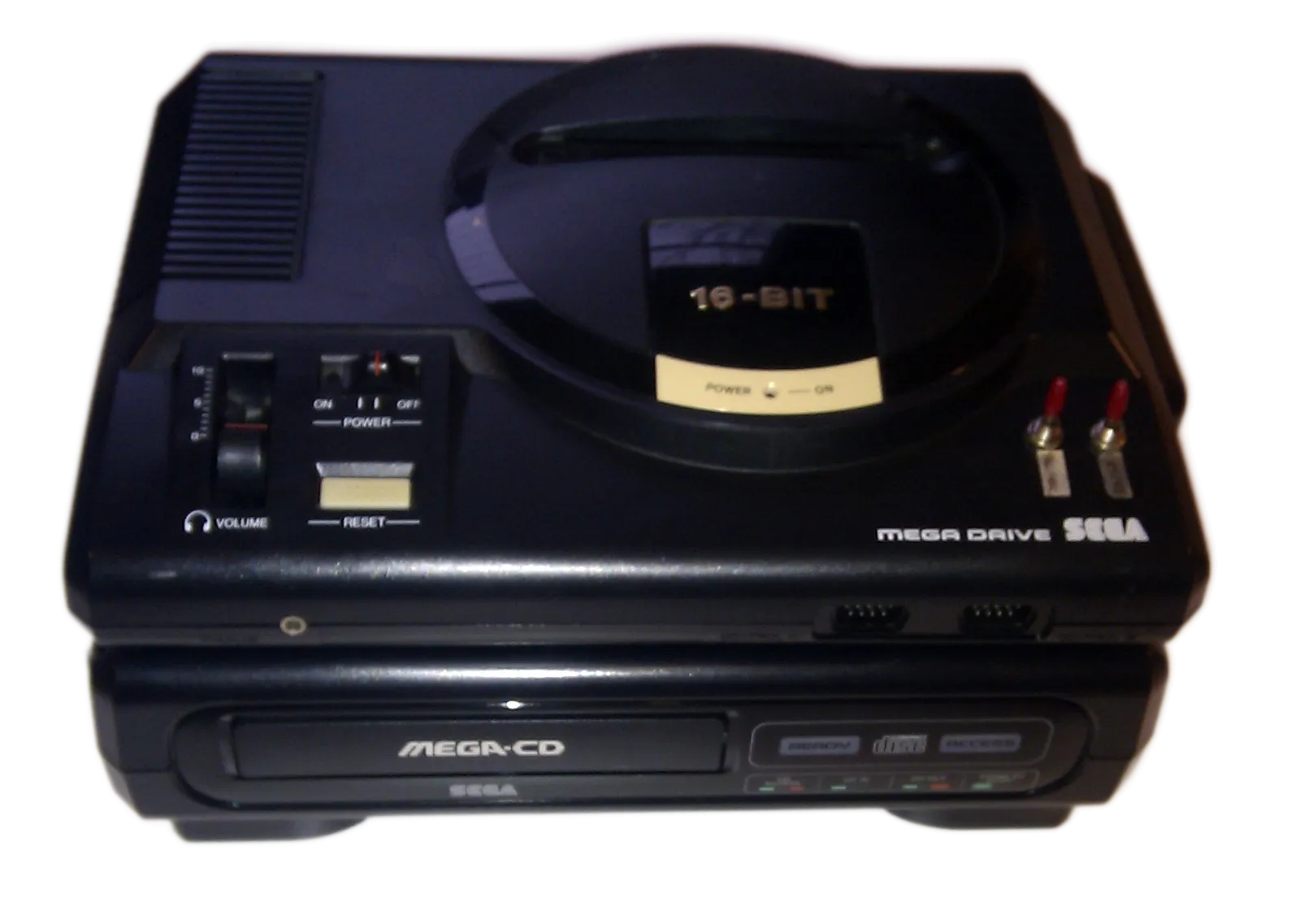
Sega also tried to adapt the Mega Drive with add-ons to the technologically advanced market. So an extension called Sega CD could be docked, with which next to the standard cartridges also games could be played on CD-Rom. In a very limited number, a combination of Mega Drive and Sega CD was released, which was marketed in Europe as a Multi-Mega and in North America as CDX. In 1994 the 32X was released. This is an add-on that raised the system performance from 16- to 32-bit. Both Sega CD and 32X were supported by relatively few titles or game developers. Connected to all expansions, the Mega Drive has an enormous size and looks pretty rough. Perhaps that’s why the Sega Nomad was finally released in 1995 (but exclusively in the USA). This is a portable Mega Drive system with built-in screen. It could also be connected to the TV via an AV cable.
As a manufacturer of arcade machines Sega produced some exclusive implementations of its arcade titles. In order to play titles such as Super Hang-On, Golden Axe or Out Run in front of the home TV, fans had to grab Sega’s 16-bit machine. Other exclusive series such as Streets of Rage, Phantasy Star and above all Sonic The Hedgehog made sure that the Mega Drive (despite its weak performance in Japan) could build up a loyal fan base. With a total of just over 30 million devices sold, it remained behind the SNES from a commercial point of view (about 49 million units sold), but was much more successful than the PC Engine (about ten million units sold).
Historical retail price
21,000 Yen (approximately, adjusted for inflation: 160 €).
Japan, October 1988. Original Japanese standard model HAA-2500.
Purchasing-power comparison at September 2026 prices; exchange rate dated 27 October 2026. Calculation and data sources.
Family tree
- PredecessorMaster System
- This objectMega Drive/Genesis
- SuccessorSaturn
Sources and further links
Connections in the collection
In the exhibition concept
- Generation 4 · Area Konsolen 2, Section 6
Mentioned in
- 32 X
- Amstrad GX4000
- Codemasters/Galoob Game Genie
- Date (Date Electronics) and Action Replay
- JVC Wondermega
- Milestones of personal computers (home computer/home computer)
- NEC/Hudson Soft versus Sega
- PC Engine Duo-R
- PC Engine GT and TurboExpress
- PC Engine SuperGrafx
- Sega Activator
- Sega Baiku Handoru
- Sega Dreamcast
- Sega Genesis Nomad
- Sega Kids Computer Pico
- Sega Mark III
- Sega Master System Converter/Power Base Converter
- Sega Mega Jet
- Sega Multi Mega
- Sega Tap/Team Player/Multiplayer
- STD SG ProgramPad 2 (SV-443)
- The decade of mascots
- Zilog Z80
Keywords
Acquire the complete collection.
The collection is offered as a whole. The inventory lists show which objects are included.